Often in our increasingly godless society, entities attempt to hide Biblical allusions that can be found in classic literature. The 1980’s motion picture The Lord of the Flies was decent, but from my perspective it set out to force a civic-minded-only interpretation of the book. For instance, instead of a beast–it was always referred to as a monster. Also their monster arrived & developed under completely different circumstances–which destroyed the Biblical symbolism that I believe William Golding obviously intended.
All civic-minded interpretations aren’t wrong; Golding wrote himself that a theme in the book was that political systems didn’t matter as far as society; only the ethical nature of individuals. The purpose of this blog is identify the Biblical allusions I perceived in Golding’s The Lord of the Flies:
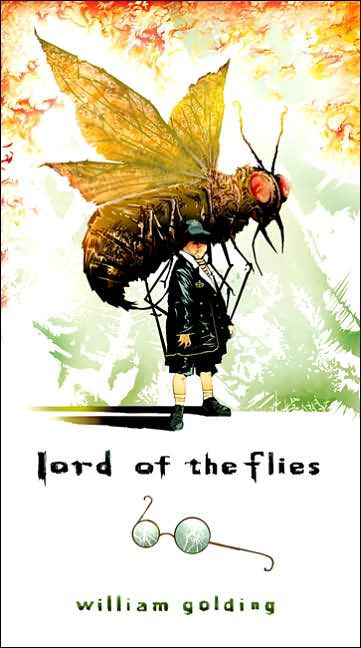
Piggy’s glasses: The lenses represent the two tablets of the Ten Commandments. The glasses are the only means of lighting a fire on the island; thereby, the only source of light. One lens is broken early in the novel. This represents the absence of the first tablet or Commandments 1- 5. The first four commands deal with man’s relationship to God and the 5th is to honour your mother & father. There is no mention of God nor are their any adults (parents) on the island. When the boys establish their first (old) covenant on the mountain, their is no mention of God, the Bible or their parents when they make the laws. The boys are left with only one lens; Commandments 6-10, or how to love your neighbor. The battle for Piggy’s one lensed glasses represent the battle for control over morals on the island of neighbors.
Ralph & Piggy: Their relationship represents Aaron & Moses. Moses was worried about his stutter so God told him to have Aaron speak for him. When Piggy spoke he was always derided by the other boys; therefore, Ralph often delivered Piggy’s practical ideas to the assemblies instead. Piggy does not fully actualize the person of Moses, but some elements are present.
Jack: The main antagonist represents the beast from the sea. In the chapter named Beast from Water, an assembly is held at the shallow lagoon. Jack openly disrespects the law of the conch. The assembly is the first group mention a mythical beast on the island. Jack initially speaks against the beast tale, but as the novel continues more & more of his power relies on the beast myth. Later in the novel Jack attempts to democratically supplant Ralph as the leader of the group. When no one votes for Jack he is humiliated and cries. Figuratively, the beast from the sea was wounded. He leaves the group, but offers an open invitation for anyone to join his group. Initially only a few hunters follow him, but eventually his group includes everyone but Ralph, Piggy and a couple littluns. Jack can offer meat via the hunt, but not a continuous fire. He leads a raid to steal Piggy’s glasses. This represents that Jack now holds the power, via power, to direct the moral law on the island (one lens–Commandments 6-10). Eventually the law on the island degenerates into Jack’s power & his power and authority (his justifications) by the end of novel derive only from the beast from the air. For instance, the final hunt for Jack’s group is Ralph. Jack’s call to hunt Ralph contains zero moral justification & he has nothing to gain. He controls all the other boys on the island & has Piggy’s glasses. His only justification is that Ralph will be a sacrifice to the beast.
The Corpse of the Pilot: The corpse represents the dragon or the beast from the air. The book is set presumably during WWII. In the chapter Beast from Air, there is an aerial battle near the island. A pilot’s plane is shot down; he ejects & deploys his parachute, but dies from his wounds before he lands on the island. His corpse lands on the mountainside & his parachute is snagged on some rocks. Whenever the wind blows and catches the snagged parachute, the strings pull on the corpse and animate it in an odd manner–a twisted beast like leviathan. The boys only see the corpse & parachute in the dark or from afar. All the boys believe it is the beast–the earlier myth is confirmed in their minds. Of the whole event: there was war in heaven & Michael & his angels cast out the dragon & his angels. Thus, the fallen corpse represents the fallen dragon. In the Bible the dragon gives the beast from the sea his seat, power & authority.
Simon: Plays the role of a Christ-like figure. When Jack & the few hunters initially broke off from the main group, Simon witnessed their first hunt while he was concealed in the bush. Jack cuts off the head of the boar & places it on a pike. After Jack’s group sets up the first sacrifice for the beast, his group scurries off with the pigs body. Simon remains concealed & contemplates why the beast doesn’t claim his sacrifice. Flies swarm the boars head & Simon approaches it. The boar’s head is called the Lord of the flies by the narrator & Simon hallucinates that it speaks to him. The Lord of flies tells Simon that attempting to kill him (the beast) is folly & that there is a part of him in Simon & every man. The monologue indicates that Simon should not resist the beast within. This represents the temptation of Christ. Simon leaves the boar’s head & travels up the mountain (he injures his leg along the way). He encounters the beast from air & learns the truth: it is a corpse of a pilot. Simon staggers back to the group as fast as possible. He is the only one who knows the truth & if he can deliver this truth it will be like delivering a new covenant. Early in the novel all the boys established the first laws (old covenant) on the mountain, but now their behaviour & code was influenced more by the beast myth than anything else. Simon arrives on the beach during an inter-group pow wow. It is dark, a storm is raging, the boys are performing a pagan pig-stabbing dance & Simon crawls out of the forest. The boys mistake him as the beast & murder him. The storm winds had freed the parachute & corpse from the rocks. Immediately after the boys murdered Simon, the pilot corpse floated into their midst. They all fled in terror. In the movie the boys knew they murdered Simon, but in the novel they never knew they murdered Simon. After the boys flee, the pilot corpse & Simon are dragged out to sea.
The Conch: At first the conch is a symbol of the first moral law on the island. You could only speak during an assembly if you hold the conch. Later the conch is an idol or the molten calf. After Jack’s group steals Piggy’s glasses, Piggy still has faith in the power of the conch. He proposed that he & what is left of Ralph’s group will march over to Jack’s group & demand the return of his glasses. Piggy believes that Jack must hear him because of the power of the conch. With the conch in hand Piggy will tell Jack, “What’s right’s right.” When Ralph’s group does march over, there is scuffle, but Piggy temporary quells the struggle by yelling that he holds the conch & must be heard. He raises the conch aloft & begins his discourse. During his discourse, some hunters on a higher cliff roll a boulder off the edge. It not only strikes and kills Piggy, but also smashes the conch into a thousand pieces. This sequence represents Moses smashing the tablets of the Ten Commandments & grinding the molten calf into powder. Moses himself is not represented in the boys struggle. Piggy is the first deliberate murder on the island–there is no longer any law on the island written in stone. The conch is the grounded idol. The conch, the molten calf in this tale is faith in a system created by men.
The Soldier on the Beach: The absence of adults on the island represents the absence of God from a civilization. The soldier on the beach represents the unexpected return of God. Jack’s group engages in their final hunt–they hunt Ralph. After evading the hunters Ralph stumbles on the beach & encounters an adult soldier. The hunters emerge from the forest behind. When all the boys see the adult soldier on the beach, they begin to realize their state of total depravity. A civic irony Golding provided himself is that while the adult saved the boys from their war–he was also in the midst of a war. The adults were in a war over their own molten calf (political systems).
Ralph: His early status is covered; he is loyal to the old covenant, but by the end of the book he is transformed & represents the end time saints who refuse to worship the beast. He never loses faith that adults (God) will return.

 THE EXILE OBSERVER