The Paradise of Bachelors and the Tartarus of Maids by Herman Mellville

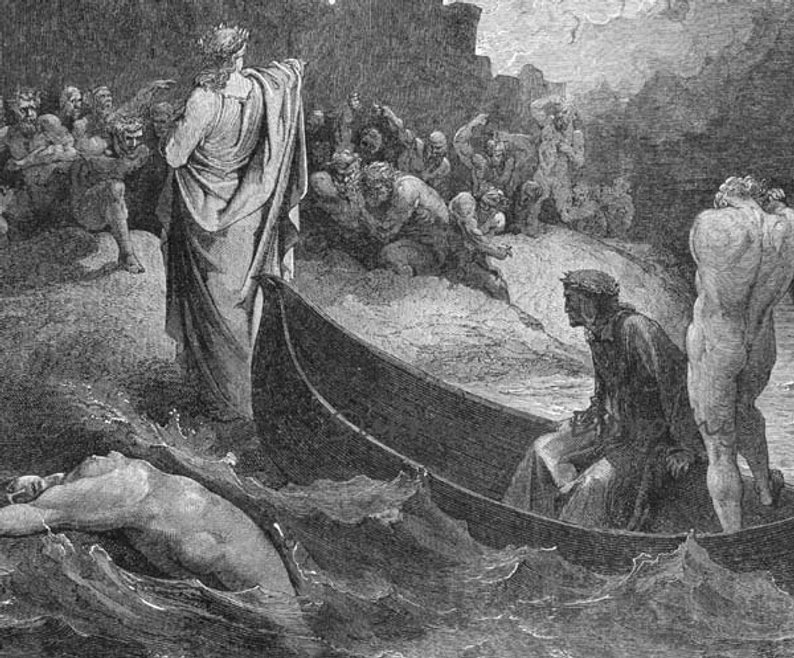
Herman Mellville’s The Paradise of Bachelors and the Tatarus of Maids (PBTM) is not technically a short story; more properly a comparative essay written in poetic prose. However, without Mellville’s nearly unrivaled style of poetic prose the essay would read like a sociology report from the 1850’s. As with most classic literature since the 14th Century, Herman tips his hat to Dante Alighieri–after all the work is Bachelors Paradise & Womens Cocytus:

“‘Why is it, Sir, that in most factories, female operatives, of whatever age, are indiscriminately called girls, never women?”

The unnamed main character (we’ll assume it’s Herman) asked his guide that question near the end of his tour of a paper mill. Before the question & answer is discussed later in this article, I will note the quasi-essay involves more than the living & working conditions of men vs women in the 19th Century–industrialization figures into the mix. The theme of the work might be the question of whether women on average were lead into a better or worse life because industrialization?

PBTM is divided into two parts as the title suggests. First Herman gives an account of visiting the Templars in London. He notes how the lives of Templar Knights have changed in the industrial age–for instance they exchanged, “the big two-handed sword” for a “one-handed quill.” Also, “The helmet is now a wig.” Essentially the modern knights are lawyers, scholars–the high society types. Mellville goes long with the comparison between the poor knights of yesteryear who defended the pilgrimage routes to Jerusalem versus the self-indulgent modern knights. Aside from the namesake, the only thing the new knights had in common with the old is that they were bachelors.

Herman visits the bachelors at a paradise-like abode near the Temple Bar. He ascends a building into a high meeting place; there was a feast, snuff, stories of travels, scholarly tales & Mellville noted that his time amongst the bachelors wasn’t measured by a “water-clock,” rather a “wine chronometer.” The only missing indulgence during the encounter was women.

We encounter women in part 2 of the essay. Herman needs an abundance of envelopes for his company & decides to purchase direct. His route to the paper mill includes passing through a, “Dantean gate”–a shortened version of, “All hope abandon, ye who enter in!” (Inferno 3.9, which what I quoted is also shortened version of what’s written above hell’s gate). Herman travels down “Mad Maid Bellows’ Pipe” until he reaches the mill; which is situated at the base of snow covered mountains.

Like the River Styx falling as a tributary for Cocytus; the mill is powered by the falling waters of “Blood River.” Intrigued by the glimpses of pale, blue faced women upon his arrival, after Herman completes his deal for the paper products with the owner he asks for a tour of the factory. Instead of Mellville being guided by Virgil, a knowledgeable factory hand called “Cupid” is his guide. The mill is a microcosm of all the circles in Dante’s Inferno. Women with expressions just as blank as the tables they sat at folded envelopes. Others served, “iron animals.” Some areas of the factory are intensely hot; others bitterly cold.

Melville calls the central machine in the factory an “iron behemoth”–it replaces Satan in his tale. In Inferno, Satan vigorously flaps his gigantic wings in an eternal attempt to escape the frozen lake & although Cocytus may develope cracks & bend, it never breaks. Melville provides a witty allusion to that scene in his story. During the tour of the factory, Mellville watches the paper pulp slowly travel the grooves & rollers of the iron behemoth, but he is perplexed that the imperfect paper which looks like cobwebs at one point doesn’t break. He asks Cupid if it ever breaks; Cupid informs him that it never tears or breaks.

The actual labour in the factory is performed by the women & the only males noted are Cupid (Mellville notes Cupid seemingly doesn’t do any job) & the owner. The women served the machinery, “mutely and cringingly as the slave serves the Sultan.” While Mellville gives descriptions of the machine/human relationship similar to Karl Marx–Herman’s PBTM is a counterpoint to The Communist Manifesto (which is probably why Mellville’s short story/essay is AWOL in modern education).

Returning to the first quote, a question from the story, why were all the women in the factory, no matter what age, called “girls?”

The answer is that the women in the factory were generally unmarried; more precisely, women with husbands & children aren’t steady workers–they miss time. That’s not good for production & Karl Marx helped cook up a theory that accelerating the destruction of the family, women’s lib as they call it, somehow would help humanity free itself from servitude to machines (and their owners) in the future. Marx was a pied piper in service of the wealthy he allegedly opposed. In fact, the part of Marx in Mellvile’s PBTM was played by the bachelors.

Mellville’s poetic essay The Paradise of the Bachelors and the Tartarus of Maids provided an argument against The Communist Manifesto via that without the family remaining as the primary structure for a civilization, the boys would never become men (modern knights were now boys just having fun–nothing worth defending anymore) & the girls would never become women (they left the service of the family for an unhappy, unfulfilling life serving machines/corporations).

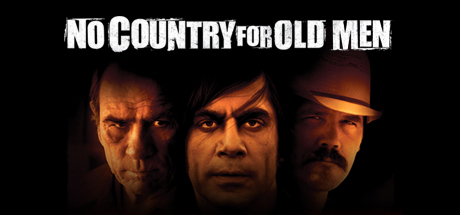
No Country for Old Men

No Country for Old Men (2007)

This is a more brief explanation (synopsis not included), so I recommend watching the movie or reading the book before indulging:

I was unhappy with all articles & video’s that explained this movie–so I have been dissecting it for the last couple days. Can’t say I was the first to figure out but…

Anton Chigurh murders a sheriffs deputy near the beginning of the movie. This is the transition from the civilized government to the wartime government. Anton uses a bolt stunner to murder one of his victims; during wartime he (the gov’t) treats men just like cattle.

Anton is the government, the selective service & his coin toss represents the draft lottery. Notice that Anton’s life is never at stake in the coin tosses. The coin tosses involve unwilling participants. Also, the movie is set 1980 & the two coin toss scenes are after the fact concerning the wars.

Key points: Sheriff Bell is a WWII vet while Llewellyn Moss & Carson Wells are Vietnam War vets. Sheriff Bell mirrors Anton in a couple scenes. Some theorist claim Bell is actually Anton. Negative: When Bell follows Anton’s footsteps, Bell’s shadow is always prominent in the scenes. Shadows have to do with the angle of light.

This represents that the WWII vet (Bell) viewed Anton (the gov’t, the selective service, the draft) in a different light than the younger Vietnam generation. Bell condones the actions of Anton because he mirrors Anton’s actions in the same places.

The scene with Anton & the old owner of the gas station is an after the fact coin toss (the draft). Like the selective service, Anton acquires information about the man before the coin toss. Notice that Anton learns the man “married into the money” before he tosses the coin (the draft). The old man was already a winner of the draft before the toss. His “good call” was marrying into the money.

In the scene the year of the coin is 1958 (Viet Cong established). Anton says the coin (the draft) travelled 22 years to get to that moment (Cold War 1947, Vietnam draft lottery 1969).

Carson Wells did not get a coin toss before Anton murders him. Wells was an officer in Vietnam & no coin toss represents that he willingly joined the service.

Carla Jean Moss is involved in a coin toss scene at the end of the movie. She was already a de facto loser; her husband (Llewellyn) was drafted for Vietnam. Anton visits her after his mission is complete–he already retrieved the bag of money. The war is over, but Carla Jean is still a victim.

Anton gets in a car accident immediately after. This does not represent meaningless fate like most theories. Anton gives the kids on the bikes $100 to ignore his involvement in the collateral damage & walks away. The money resulting from the war makes the war okay–accept the version of events from Anton (the gov’t). Anton hobbles away from the scene of the accident with a broken arm–the bone is sticking out–exposed. This represents that even if the governments motives for the war are exposed, as an entity, they always get away with their crimes in the end.

Sheriff Bell is increasingly appalled by Anton’s mode of operation as the movie progresses. He thinks his brutal mode is something new, but he learns from his cousin Ellis that Anton’s way was always the case. Bell’s war (WWII) was the result of “drug deals or business deals gone wrong” just like the more modern wars. The more he learns about Anton, the more he learns the truth about his own civilization.

Bell’s dream at the end: He and his father are on horseback riding through the mountains. His Dad rides ahead & he sees his Dad carries a horn with fire in it (transporting embers for the next campfire). He says he knew his Dad would already have a campfire going in the darkness when he finally arrived. It appears Bell is talking about death…negative.

Control over fire represents civilization. Bell believed he was following in his Dad’s footsteps & carrying on the tradition of his civilization. Bell never had faith in God; he had faith in the system. He learned that his Dad’s civilization & his civilization were just a dream & Anton (the gov’t) was always the same. Bell says, “Then I woke up.” The movie ends.

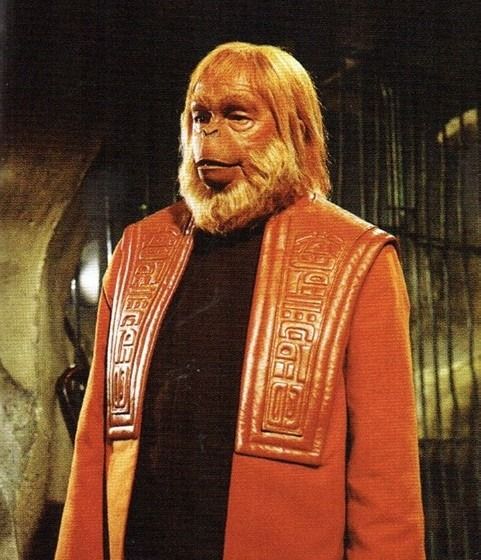
Planet of the Apes: Interpretations, Themes, Theology, Philosophy

The original Planet of the Apes (1968) & Beneath the Planet of the Apes (1970) contained far more depth by way of theological & philosophical issues. Unfortunately, the last three movies in the series went downhill in a hurry concerning those topics.

The first two installments reflect this to the viewer:

Genesis 1:27 “So God created man in his own image, in the image of God created he him; male and female created he them.”

The creation or origin narrative was the theme not only for the apes, but also the surviving intelligent humans we encounter in Beneath the POTA. In the third movie (Escape from the POTA) one short sequence caused a radical shift for the series & the recent reboots began with the same theme. Cornelius tells the tale of how the apes rose; however, his story not only contradicted everything from the ape’s Sacred Scrolls in the first two movies, but also his own theory in POTA–that apes physically evolved from man.

The Sacred Scrolls were simple; apes were created in the divine image. In POTA Cornelius discovered evidence that man may have had an older civilization than the apes. Men, were speechless beast-men on late 40th Century Earth. They never could speak, nor have reason according to the ape’s religion. In Escape from POTA Cornelius claimed that primitive apes were pets for humans, then they advanced to chores, then slavery. Finally, one day an ape named Aldo spoke a word back to the humans that he had been told countless times… “No.” He claimed that instance was documented in The Sacred Scrolls; he must have recounted the incident from the New Revised Version of The Sacred Scrolls.

Thus, the POTA series shifted its focus from brilliant theological & philosophical issues to oppressed vs oppressor philosophy (which was a present issue, but to a much lesser degree). The series shifted from transcendent, universal issues with everlasting implications to temporal socio-political issues. Therefore, The Sacred Scrolls & the series shifted from “in the beginning God created…” to “in the beginning–rebellion.”

In the first two POTA’s it is logically inferred to the viewer that man destroyed himself  & the apes mutated as a result of nuclear fallout. This can be supported via the mutated humans in Beneath the POTA; which now had superior abilities such as telepathy.

In POTA the presence of an alien challenged all the apes’ beliefs–a human astronaut named Taylor. However, it is eventually revealed that Taylor is only an alien to the time (40th Century) & not the place (Earth).

Dr Zaius was an orangutan that served as the Minister of Science & Chief Defender of the Faith. In retrospect, Zaius privately knew that an older human civilization existed prior to ape civilization. In public he upheld the full-spectrum verity of The Sacred Scrolls. He was a Neoplatonist per say; he had a logical, pragmatic faith in the wisdom, principles & morals contained in The Sacred Scrolls. Ultimately, Dr Zaius knew if the apes ceased to believe the origin story in the scrolls; the wisdom, principles & morals therein would be jettisoned as well. Thus, he promoted the noble lie.

(Note to the reader: I am not a Neoplatonist. I believe the literal creation in the book of Genesis & also believe the real event presents allegories)

Speaking of Plato, Ape civilization was organized along the lines of The Republic. The orangutans were the oligarchs, the gorilla’s were the soldier class & the chimpanzees were the masses. The chimpanzees became more enlightened through their study of science. The discoveries of the chimpanzees began to clash with boundaries set by the oligarchs.

Plato is of even more importance in POTA. The chimpanzee Cornelius discovered evidence of an older human civilization inside of a cave. For that reason Cornelius postulated the theory of evolution. Logically, his discovery did not prove that apes physically evolved from men. In The Sacred Scrolls (NRV) the apes socially evolved from men. However, in POTA, Cornelius’s theory was based on our cave’s (education) theory of evolution.

While Cornelius’s theory reflected the genesis of a new religion (or scientific theories supplanting religion), the mutated humans in Beneath the POTA displayed the end of Cornelius’s new religion. These mutants worshipped a nuclear missile (The Bomb) inside of a cave. The mutants no longer practiced a religion that included a creation or origin story, but instead an evolution story.

The mutants worshipped The Bomb because it was a nuclear war that caused The Holy Fallout, their change, their evolution to have psionic capabilities. The mutants wear false normal human faces, but when they reveal their “innermost self to the bomb” they remove their masks to reveal severe radiation sickness. The nuclear missile in their subterranean abode was the idol & represented the power of their god. In one scene, the mutants hold a liturgy that is identical to many Christian liturgies save for substituting God & the Holy Spirit with The Bomb & The Holy Fallout in identifiable scriptures.

The allusion is that the mental super-humans do not even need to eat. The “everlasting” Bomb as they call it brought peace or heaven on Earth in their theology. The mutants have a true weakness though; their powers are based on visual & audio illusions that cannot inflict real damage. If the mutants wanted someone to be murdered, they would use their mental capabilities to make others commit the act. It is inferred that they made gorilla scouts kill each other because their mutants powers have been bestowed “for peace.” By this doctrine they can disassociate themselves from any violence they cause.

That statement is in bold because that summarizes the religion of science. For instance, when some abandon faith in the Lord Jesus for faith in science, they often boast of all the good that the sciences have bestowed upon the world, but disassociate the same from biological weapons, chemical weapons or The Bomb.  One could reasonably claim a figurative allusion in early POTA was abandoning the Tree of Life for the Tree of the Knowledge of Good and Evil (Genesis 2:16-17).

First, I will return to the Plato theme:

Taylor: “That still does not explain the why. A planet where apes evolved from men? There’s got to be an answer.”

Dr. Zaius: “Don’t look for it Taylor…you may not like what you find.”

This exchange between Taylor & Zaius was after Cornelius (accompanied by his chimp wife Zira) displayed the evidence of an older civilization comprised of men inside of a cave to Taylor & Dr Zaius. Taylor agreed with Cornelius’s postulation, but did not find truth inside the cave–he still thought he was on another planet. After Taylor rode off in search of answers further out in the forbidden zone, Zaius ordered the gorilla’s to seal the cave with explosives despite Cornelius’s protests. Dr. Zaius’s mode was not to secure power for the oligarchs (orangutans); his mode was to preserve his civilization.

The contents inside the cave were not going to be the basis for the apes’ religion or education. Zaius knew scientific theories that resulted from that evidence conflicted with the foundation of his civilization. He also finally admitted that he knew an older civilization of intelligent men had existed, but they had destroyed themselves via their own science. That theme reminds me of a famous quote by General Omar Bradley:

“Ours is a world of nuclear giants and ethical infants.”

The irony of Taylor & Zaius’s exchange was that Zaius knew Taylor would not find truth inside of the cave. The orangutan knew he would find it outside of the cave & his foreboding warning to Taylor mirrored:

Ecclesiastes 1:18 “For in much wisdom is much grief: and he that increaseth knowledge increaseth sorrow.”

Dr Zaius was entrenched in a battle to keep the apes from suffering the same self-destructive fate that men suffered–which reflects:

Ecclesiastes 1:9 “The thing that hath been, it is that which shall be; and that which is done is that which shall be done: and there is no new thing under the sun.”

Early in POTA the impression is that the conflict is the alleged truth of science versus the oppressive force of religion. Midway through the film, Taylor acts as an enlightened alien guide to help Cornelius develop his theories & fight for what he believes to be the truth. The end of POTA reflects the opposite. Taylor finds the truth he was looking for on a beach further in the forbidden zone–the half-buried, mangled Statue of Liberty. He realizes he was on Earth all along, but in the future & man had finally went through with his nuclear war.

That is another grand irony in more ways than one. Again, Taylor, the enlightened alien was in fact helping to put Cornelius (and the ape civilization as a whole) on the same road that the leads to the same end; the same end Taylor just encountered. Inside the cave, based off the evidence, Taylor boasted to Dr Zaius that this older civilization of men on the planet were superior to Zaius’s civilization because of science & technology.

In the final conversation between Zaius & Taylor (from which I already provided the final exchange), Zaius admits to Taylor that he knew of the older civilization of men. Zaius said of men:

“His wisdom must have walked hand and hand with his lunacy.”

This is outside of the cave & Zauis then tells Taylor the truth:

“The Forbidden Zone was once a paradise. Your breed made a desert of it, ages ago.”

Taylor did not fully comprehend Zaius’s statement. It did not concern a similar species on a different planet–it was Taylor’s breed. The beastmen that remained were all that remained of Taylor’s people. Zaius rejected that Taylor was an alien from the beginning. He did not know Taylor time-travelled; he believed Taylor was a leftover from the destroyed civilization of intelligent men & was correct.

Zaius had a concern equal to Cornelius’s corrupt theories. He thought Taylor was part of an intelligent tribe of humans that remained. If that was the case, Zaius knew they had or would soon have the technology to destroy ape civilization. For this reason, the Apes began sending out Gorilla scouts in Beneath the POTA. They search for Taylor’s theoretical tribe. They find the mutated super-humans, who already had imprisoned Taylor & Brent (an astronaut who was sent out to find Taylor & encountered the same timespace rift).

Both Taylor & Brent are essentially ghosts of a long dead civilization. They cannot assimilate into the ape civilization, the superhuman civilization nor the beastmen herds. Early in POTA, after the crash of their shuttle & a long march; Taylor & the two other astronauts encounter the beastmen (concerning the astronauts with Taylor: one died before the crash, one died in the ape hunt, one was lobotomized by the apes).  The beastmen are foraging fruits, vegetables & it initially looks like the Garden of Eden. Taylor believes that if the beastmen are the best that the planet has to offer, due to the superior knowledge he & his comrades, they’d be running the planet in 6 months. Taylor initially plays the role of the serpent:

Genesis 3:5 “For God doth know that in the day ye eat thereof, then your eyes shall be opened, and ye shall be as gods, knowing good and evil.”

It is a short lived revel because the beastmen were actually foraging amongst the apes’ crops. Even as the movie progresses, Taylor plays the role of the serpent among the apes. He is the enlightened alien to Cornelius & Zira, but the devil IAW with ape civilization. This is yet another aspect that is lost when the POTA series fully transitioned into oppressed vs oppressor philosophy.

Extra-Terrestrials. This movie reflects the two camps that reside in our world. One group would regard ET’s as the enlightened aliens that are here to help man progress towards a technologically & morally superior civilization. The other camp, my camp, knows that the ET’s are either here because they destroyed their own civilization (via war or exhausted their resources) or they were cast out of their own civilization:

Revelation 12:7 “And there was war in heaven: Michael and his angels fought against the dragon; and the dragon fought and his angels,

8 And prevailed not; neither was their place found any more in heaven.

9 And the great dragon was cast out, that old serpent, called the Devil, and Satan, which deceiveth the whole world: he was cast out into the earth, and his angels were cast out with him.”

Beneath the POTA is the 2nd movie; however, it is the chronological end of POTA & the world. Taylor identifies the nuclear missile that the mutants worship as the alpha & omega bomb or the doomsday bomb. This particular bomb apparently existed since Taylor’s time in the 20th Century & was build to be the ultimate war deterrent. That fact helps explain the mutants peace doctrine–The Bomb, their god, a manmade idol, was built to bring peace on Earth. It was capable of melting the Earth’s atmosphere according to Taylor.

The end of Beneath the POTA is awful for the viewer; the same end is spectacular on theological & philosophical basis. The apes overcome the mutants’ defensive illusions, invade the subterranean city & kill all the mutants who have yet to commit suicide. The apes (Zauis included) enter the sanctuary of the Bomb & pull down the golden idol (The Bomb). It begins leaking nauseas gas. The gorilla commander is about to push the red button thinking he can stop the gas leak. Brent & Taylor had been hiding in the sanctuary; they break concealment & begin shooting to stop the detonation. At the tail end of melee, a mortally wounded Taylor states that it is doomsday & asks Dr Zaius to help him (the inference is that if he can get Zaius to help him with his wound, then he can disarm the bomb). Zaius refuses. Taylor collapses, but reaches his arm out & pulls down red button.

A building flash intensifies on the screen. An emotionless third party narrator says:

“In one of the countless billions of galaxies in the universe lies a medium-sized star, and one of its satellites, a green and insignificant planet, is now dead.”

The screen goes black & the credits roll in silence.

Consider origin, the creation theme of POTA. The theological & philosophical message at the end of Beneath the POTA was not nihilism or everything is worthless. The message is that if a world abandons its creation narrative, then its existence & death are meaningless.

Therefore POTA & Beneath POTA are often misunderstood as the battle for science to overcome religious oppression, or rightly understood to a lesser degree concerning the dangers of modern science or technology.

The prime message of the two movies is: there are ultimately, only two choices…creationism or nihilism.

Thus, if one is absolutely opposed to creationism & believes there must be another answer, I say:

Dr. Zaius: “Don’t look for it Taylor…you may not like what you find.”
The Poem that Nobody Likes (a poem)

O’ love is so cliche, they say.

Perhaps verse about struggles

with society or sobriety

if you desire notoriety.


Why, Dante already thought that

and Shakespeare already brought that

and Shelley already wrought that

and Poe, too many know.


Caverns measureless to man (1)

are no longer in demand,

So–go back to your unreal city! (2)

for your poetry is pretty…


The moon, is a naked whore,

no ballads to her anymore,

Spare us all the old tropes,

We want desire, without hope! (3)


We want racism! we want sexism!

You don’t speak to our activism,

Your idealism, your romanticism

only warrants our vandalism.


We want subversion and perversion,

our interest is the inversion

of Philippians four-eight,

verse that inspires our hate.


1) Kubla Khan, Samuel Coleridge

2) The Waste Land, T.S. Eliot

3) Close enough to Inferno 4.42, Dante Alighieri (Longfellow version)


Purgatorio–Turning Point (Virgil’s Discourse on Love)

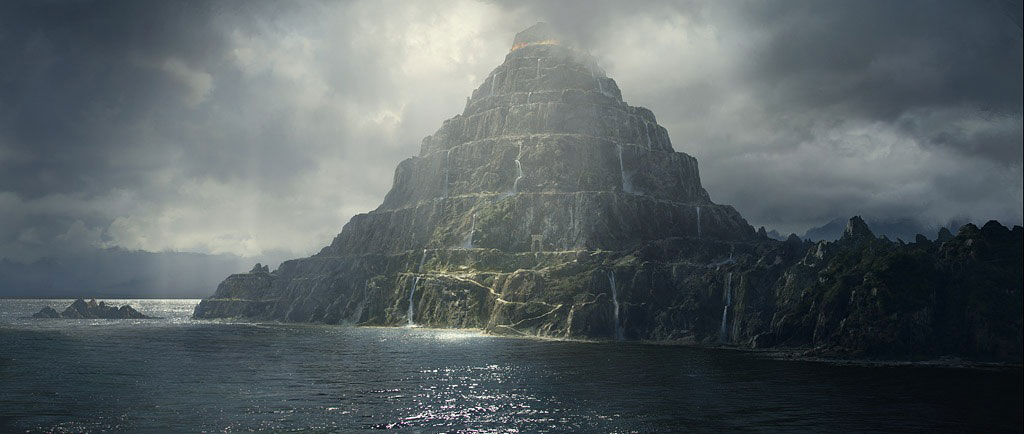
Dante Alighieri’s Inferno is a fine standalone. Hell is thick, dark, exhausting & simply escaping it offers satisfaction enough for the majority of readers. There are more reasons people often vacate The Comedy at Purgatorio. If one continues to climb Mount Purgatorio it is at Canto 51 & 52 (of 100) that we reach the turning point or prime catharsis for Dante’s real life. Catharsis (Greek) & Purgatorio (Latin) are close to the same words.

The dilemma of the entire poem is love.  Dante had a secret, burning, never realized, thus unrequited love for Beatrice. Also take into account his later exile from the city of Florence. On top of that, consider that Dante poetically tells us in the first three lines of the book that he was in the midst of most likely a PTSD episode or emotional time travel event (love madness or obsessive love can manifest due to PTSD). All the former emotions from Dante’s Vita Nuova time period may have flooded back in coupled with the emotions from his recent exile.

I must point out that Dante’s Limbo is the first circle of the Inferno because that is the initiation for a similar experience to Dante’s. The modern usuage of “Limbo” is not knowing something or waiting for an answer–incorrect according to Dante’s usage. His Limbo is a constant desire coupled with the tormenting knowledge that there is no hope of fulfillment:

“For such defects, and not for other guilt,
Lost are we and are only so far punished,
That without hope we live on in desire.”

Inferno 4.40-42

Dante may have been experiencing a PTSD duality when he began writing  The Divine Comedy as they call it, but the proper title per Dante “Here beginnith the comedy of Dante Alighieri, a Florentine by birth, but not in manners”:

“MIDWAY upon the journey of our life”

Inferno 1.1

It is our (plural) life (singular). It is not our lives because Dante is not including our lives in the equation, but the separate parts of his life, to wit–him from sometime from the past occupying the same space as him from the present.This time-travel duality was best reflected by Dante in Inferno 8 & 9. The cantos reflect emotional events from two distant times in Dante’s life. Both events are portrayed just outside the walls of the city of Dis.

The walls of Dis separate the Inferno’s 5th & 6th Circles. The 5th Circle is the punishment for the Irascible & the Sullen or those overcome by bitterness–wrath. Both real life events (Beatrice & Exile) threatened to leave Dante in a stasis–bitterness. In the poem both events attempt to permanently halt his journey in the circle of wrath.

Inferno 8 reflects the emotions from Dante’s exile. The city of Dis is a hellish representation of the city of Florence (IE it has mosque towers instead of Christian spires). When Dante & his guide Virgil reach the walls of the city, the denizens on top of the wall state that Virgil can come in, but Dante cannot pass. Virgil is the symbol for Dante’s poetry. Florence wanted the poetry (or an association with it), but not the poet. Dante could have been in a perpetual state of bitterness over his exile.

Inferno 9–we are still outside the walls of Dis. This canto reflects the emotions from Dante’s episode in Vita Nuova XIV. In the Inferno, three Furies land on the mosque towers & call for Medusa to turn Dante into stone–a transfiguration. In Vita Nuova XIV, Dante was neck deep in his love madness for Beatrice. His friend invited him to what was allegedly a simple gathering of lovely women–he did not even know Beatrice would be there.

The entry & sonnet are slightly ambiguous, but the historian Boccaccio believes it was a small wedding reception dinner. The new bride–Beatrice. At the sight of Beatrice & her love interest, as Dante puts it, he suffered a transfiguration. He became pale & sickly. A few of the women at the gathering (The Furies) & Beatrice (Medusa) began to giggle & mock Dante for his sickly appearance. Dante was mocked by the woman he loved during a great moment of suffering. Again, Dante could have been perpetually bitter over the matter.

“You join with other ladies to deride me
and do not think, my lady, for what cause
I cut so awkward and grotesque a figure…”

Vita Nuova XIV, 1-3

Dante & Beatrice’s reciprocal relationship prior to his transfiguration, according to Dante, was nothing more than Beatrice giving Dante one friendly greeting on the street (love madness). It was a long, secret, building, burning love I had for a woman that initiated my event. Like Dante with Beatrice, I fell in love with her at first sight, but it was a long time before any association. At best, it’s climax, the relationship was only an association between us in the setting of a formal environment.

It was so much more to me because the long building secret desire (Proverbs 27:5). Once the association went south, even though it never actually went north, I had heard 2nd hand that she claimed, “We were never even friends.” You can be frozen in a state bitterness over such a thing.

Once you are able to resume a fully functional state after a bout with love madness or unrequited love, you desire answers. It is apparent Dante long sought answers to the same questions I had.

When we feel the true emotion of love, we believe it is automatically good. But if it is good, how could it lead us into disaster? How can the recipient hate it so much? Was a person’s love madness a simple pride problem instead? Most importantly–was it actually love?

In Inferno, sin is punished. In Purgatorio, vice is purged. Both realms have circles of wrath. Dante spends much time & was halted before leaving the circles of wrath in Inferno & Purgatorio. It is Purgatorio’s circle of wrath where Virgil provides the discourse on love. This discourse provides Dante with some answers to questions I posted in the paragraph above:

“Hence thou mayst comprehend that love must be
The seed within yourselves of every virtue,
And every act that merits punishment.”

Purgatorio 17.103-105

“The natural was ever without error;
But err the other may by evil object,
Or by too much, or by too little vigour.”

Purgatorio 17.94-96

“Now may apparent be to thee how hidden
The truth is from those people, who aver
All love is in itself a laudable thing,

Because its matter may perchance appear
Aye to be good; but yet not each impression
Is good, albeit good may be the wax.”

Purgatorio 18.34-39

I love the allegory of the wax. The wax is love & good nonetheless–regardless of the impression (seal) in it.

Love in itself, is intrinsically good. Enter the object/subject of that love (John 3:19) or the degree in respects to a certain object/subject. During my event, which included the unrequited love, those I told said it was obsession. I was offended by the claim & countered that it was love. We were both right according to Dante. Love madness is love…but it’s not destiny. There is the rub–the thought that it must destiny due to the personal strength of the emotion.

In conclusion, if you suffer through obssession or love madness (I consider the latter a more accurate label), even if it is or isn’t a byproduct of something else–you want some answers. Is loving someone who doesn’t love you (or doesn’t return it to nearly the same degree) some sort of crime? No, because who can understand the subject of unrequitted love better than God?

John 1:11 “He came unto his own, and his own received him not.”

Modern “Peace” and “Toxicity.”

I have noted a trend that when many say “peace,” they mean, “avoid or flee.” Often they must flee “toxic” or “negative” people to preserve their convenience. The first problem with that method is the person automatically assumes only everybody else can be “toxic” or “negative.” So the individual is allegedly in a perfect state of peace, unless someone disrupts their fantasy existence in any way. This modern peace is complete selfishness.

The purveyors of the toxic people theories apparently cannot discern the difference between positive & negative versus good & evil. They are mutually exclusive concepts. To ask someone not use opoids is a negative request, but good. You will notice that the toxic investigators are inconsistent. It is all right to be negative when it concerns something they do not agree with; however, any negative proposition towards something they find agreeable–that is when the other person is allegedly being negative or toxic.

Thus, the sum total of that faux version of peace equals: the successful elimination of anything or anyone contrary to one’s personal agenda. If the other person accrues enough bad checkmarks on their toxic checklists–elimination. Strikingly, consider the fact that if one refers to a toxic people checklist to determine who should or should not be in their lives–that is a demand that everyone must obey their standard or else. Is not manipulation suppose to be a toxic behaviour?

One of the most wicked things about the toxic people theory is that truth is meaningless to these people. The truth can be positive or negative, but they only want what they consider the positive truths in their vicinity. Anything negative, even if it is the truth, must not be allowed to abide in their own personal Garden of Eden.

I am sure all of our social media news feeds are full of empty memes that speak of avoiding negativity, avoiding drama, rising above, endless memes about how to achieve love & peace. The exhaustive mentions of such subjects can be a display that the person is compensating for the lack of it in their own hearts.

John 14:27 “Peace I leave with you, my peace I give unto you: not as the world giveth, give I unto you. Let not your heart be troubled, neither let it be afraid.”

Peace will not result from anything the world has to offer–that includes modern psychology. So following the latest checklist from the latest trendy journal is not going to work. For that peace in our hearts, we need to abide in the true vine (John 15:1)–the Lord Jesus Christ.

John 15:4 “Abide in me, and I in you. As the branch cannot bear fruit of itself, except it abide in the vine; no more can ye, except ye abide in me.”

Peace is a fruit of the Spirit (Gal 5:22). It is either produced by that or it is not produced in the heart at all; regardless of any fluffy language that proceeds from a person’s mouth. Also it cannot be broken down nor understood by psychologists.

Philippians 4:27 “And the peace of God, which passeth all understanding, shall keep your hearts and minds through Christ Jesus.”

Moving on to peace with others. It is not a bad thing to regularly avoid confrontation, but fleeing all confrontations will not lead to peace. Sometimes confrontations produce good results. Perhaps there were unknown extenuating circumstances in a conflict with another? After that revelation, two people might have peace with each other, but they would never have peace by avoiding that confrontation. They would never know the truth of the matter; they would never know the other person did _________ because of ________.

So because the toxic investigators are not interested in truth, they are not interested peace. Only subjective truth can preserve their selfish bubbles. Their self-absorbed, no-drama behaviour often prevents true peace.

Being judgmental is also toxic behaviour–yet you are supposed to refer to a checklist created by a psychologist to judge if other people are worthy of your presence?  Toxic people checklists could serve a better purpose by judging whether one is a human being or a cyborg. No bad checkmarks = robot.

No one is going to find peace by demanding that everyone else in their life must walk on eggshells around them. Trying to control others with arbitrary checklist will not fix one’s own bitter heart. These insane checklists will not only drive toxic people out of their life, they will eventually drive everyone out of their life. There is something known as forgiveness.


Christians & Greek philosophers

The truth and logic are mutually exclusive. Something can be logical, but not true. Something can be true, but not logical. For instance, give them an inch and they will take a mile is a slippery slope argument. Ask Neville Chamberlin about the consequences of choosing logic in that comparison.

Why do Christian institutions place Aristotle & his logic or science on a pedestal?

1 Corinthians 1:20 “Where is the wise? where is the scribe? where is the disputer of this world? hath not God made foolish the wisdom of this world? 21 For after that in the wisdom of God the world by wisdom knew not God, it pleased God by the foolishness of preaching to save them that believe. 22 For the Jews require a sign, and the Greeks seek after wisdom: 23 But we preach Christ crucified, unto the Jews a stumblingblock, and unto the Greeks foolishness; 24 But unto them which are called, both Jews and Greeks, Christ the power of God, and the wisdom of God.”

I do not need anyone to point out that by man’s standard my faith is illogical.  I am not interested in logic, I am interested in the truth.

Colossians 2:2 “That their hearts might be comforted, being knit together in love, and unto all riches of the full assurance of understanding, to the acknowledgement of the mystery of God, and of the Father, and of Christ; 3 In whom are hid all the treasures of wisdom and knowledge.”

I have not located anything in the Bible that refers Christians to also seek Greek philosophers for some other wisdom or knowledge. The verse says “all.” In fact we receive a warning a few verses later:

Colossians 2:8 “Beware lest any man spoil you through philosophy and vain deceit, after the tradition of men, after the rudiments of the world, and not after Christ.”

Interpretations of the Bible are not found outside the word of God. The works of Plato & Aristotle are not a supplement to the Bible. Aristotle’s unmoved mover, his apathetic god is the complete opposite of Christianity:

John 3:16 “For God so loved the world, that he gave his only begotten Son, that whosoever believeth in him should not perish, but have everlasting life.”

Plato does not believe revelation, but instead apprehension–which is something more akin to the Prometheus story, which itself is akin to glorifying the devil. Also, avoid the silly claim that Plato or Aristotle influenced the Apostle Paul because the letters to the Corinthians & the Colossians were from him (and I believe what he wrote came from God).

I am not stating that studying Greek philosophy is evil, but what do they have to do with Christianity? Nothing. When it comes to God, the sum total of Greek philosophy is ignorance:

Acts 17:23 “For as I passed by, and beheld your devotions, I found an altar with this inscription, TO THE UNKNOWN GOD. Whom therefore ye ignorantly worship, him declare I unto you.”

Did the Apostle Paul apprehend his message? No.

Galatians 1:11 “But I certify you, brethren, that the gospel which was preached of me is not after man. 12 For I neither received it of man, neither was I taught it, but by the revelation of Jesus Christ.”

Some of the Greek philosophers are interesting, but let’s not synthesize their precepts with theology. The result is that people think they have found an alleged God Particle. Notice that some aspect of their scientific god is always beneath man somehow?

Isaiah 55:9 “For as the heavens are higher than the earth, so are my ways higher than your ways, and my thoughts than your thoughts.”


Attitudes on the End of the World


For Bible believers, we know that the governments & eventually a government of men will never build the kingdom of Heaven on Earth. It will be the exact opposite–there will be a one-world kingdom of darkness before the return of the Lord Jesus Christ:

Revelation 13:7 “And it was given unto him to make war with the saints, and to overcome them: and power was given him over all kindreds, and tongues, and nations. 8 And all that dwell upon the earth shall worship him, whose names are not written in the book of life of the Lamb slain from the foundation of the world.”

In the aforementioned verse “him” speaks of the beast from the sea. It is for this reason that many Christians adopt a laissez-faire attitude about things going on in their nation & world; it is going to happen anyway so why do anything about anything? The error with that attitude is that we do not know if it is the end of the world. There are signs that tell us it is near (Matt 24:33), but in the same chapter take note:

Matthew 24:8 “All these are the beginning of sorrows.”

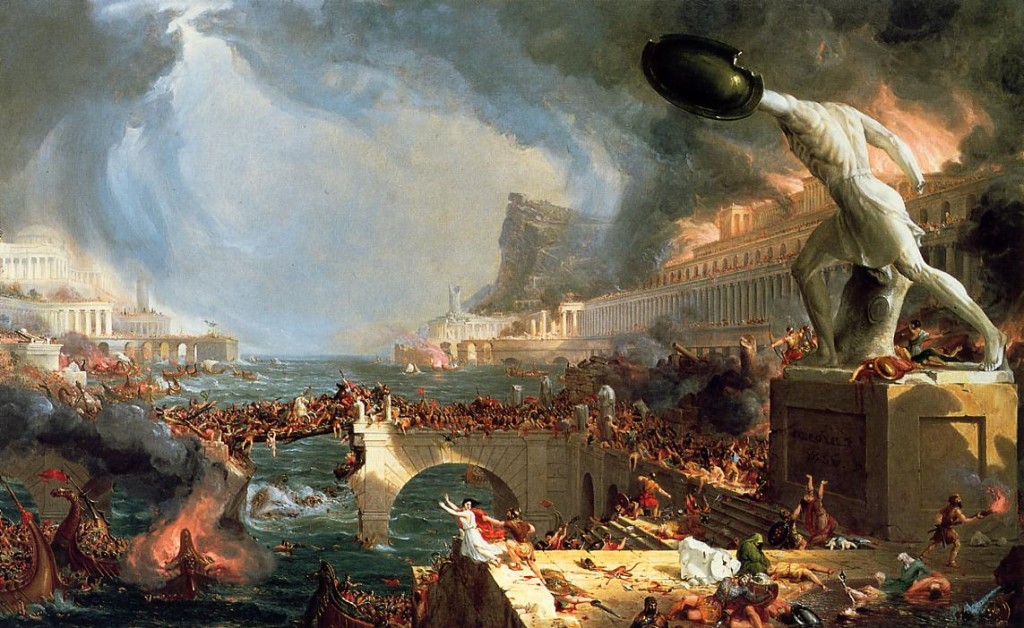
The sorrows are akin to a birth pangs. Generally the frequency & intensity of the pangs increase as the birth draws closer. Items from Matthew 24 can be applied to the rise & fall of many civilizations. The larger the civilization, the larger the fall. Many saints of yesteryear were convinced that the fall of Rome was the apocalypse. Consider the frequency & intensity when considering the scale of Rome. We do not know if this is the last civilization, but while the cycles follow Matthew 24, the Lord Jesus was speaking of the end of the world in Matthew 24:

Matthew 24:30 “And then shall appear the sign of the Son of man in heaven: and then shall all the tribes of the earth mourn, and they shall see the Son of man coming in the clouds of heaven with power and great glory. 31 And he shall send his angels with a great sound of a trumpet, and they shall gather together his elect from the four winds, from one end of heaven to the other.”

In Matthew 24 the claim that the Lord Jesus was speaking of the fall of Jerusalem & simultaneously speaking of the end of the world can be correct. Matthew 24 can be the model for the fall of civilizations and the final one-world civilization.

The main point of this article is that Christians should not let their country descend into a communist, atheistic state of darkness because they think it is the end of the world. It might not be and Christians may simply let their country transform into a miniature hell on Earth without a peep. Also, is that fair to our children?

I do believe that when the end does come, it will be undeniable for Bible-believing Christians. No prophecy in scripture will need to be worked or forced into a framework of a personal theory:

2 Thessalonians 2:1 “Now we beseech you, brethren, by the coming of our Lord Jesus Christ, and by our gathering together unto him, 2 That ye be not soon shaken in mind, or be troubled, neither by spirit, nor by word, nor by letter as from us, as that the day of Christ is at hand. 3 Let no man deceive you by any means: for that day shall not come, except there come a falling away first, and that man of sin be revealed, the son of perdition; 4 Who opposeth and exalteth himself above all that is called God, or that is worshipped; so that he as God sitteth in the temple of God, shewing himself that he is God.”

I can say that there has been a great falling away in the U.S. Even many professed Christians propagate a “Jesus” that is contrary to or not found in scripture. Their “Jesus” is molded solely by popular morality & politics. Many professed Christians seemingly do not believe the Bible at all. They take the attitude that men authored the Bible and that men at that time did not understand the science that we know today. Make no mistake, Aristotle’s science had already been around for centuries before the letter to Timothy:

1 Timothy 6:10 “O Timothy, keep that which is committed to thy trust, avoiding profane and vain babblings, and oppositions of science falsely so called:”

But again, the fall of the US is not necessarily the end of the world. I do not believe Christians should willfully let a free society where the Gospel of Jesus Christ can openly be preached descend into a society where we are persecuted for it. We are to preach it anyway, but why let those conditions develop if they can be avoided?


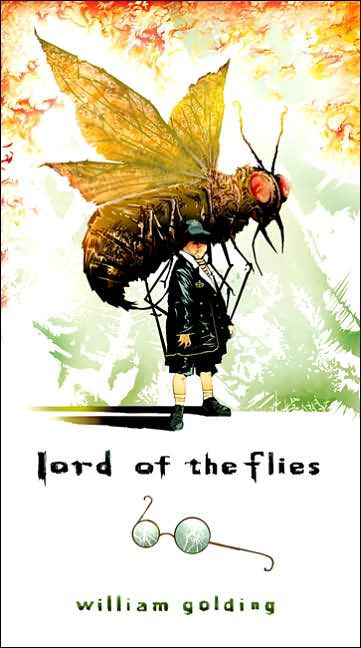
“The Lord of the Flies”–Symbols

Often in our increasingly godless society, entities attempt to hide Biblical allusions that can be found in classic literature. The 1980’s motion picture The Lord of the Flies was decent, but from my perspective it set out to force a civic-minded-only interpretation of the book. For instance, instead of a beast–it was always referred to as a monster. Also their monster arrived & developed under completely different circumstances–which destroyed the Biblical symbolism that I believe William Golding obviously intended.

All civic-minded interpretations aren’t wrong; Golding wrote himself that a theme in the book was that political systems didn’t matter as far as society; only the ethical nature of individuals.  The purpose of this blog is identify the Biblical allusions I perceived in Golding’s The Lord of the Flies:

Piggy’s glasses: The lenses represent the two tablets of the Ten Commandments. The glasses are the only means of lighting a fire on the island; thereby, the only source of light. One lens is broken early in the novel. This represents the absence of the first tablet or Commandments 1- 5. The first four commands deal with man’s relationship to God and the 5th is to honour your mother & father. There is no mention of God nor are their any adults (parents) on the island. When the boys establish their first (old) covenant on the mountain, their is no mention of God, the Bible or their parents when they make the laws. The boys are left with only one lens; Commandments 6-10, or how to love your neighbor. The battle for Piggy’s one lensed glasses represent the battle for control over morals on the island of neighbors.

Ralph & Piggy: Their relationship represents Aaron & Moses. Moses was worried about his stutter so God told him to have Aaron speak for him. When Piggy spoke he was always derided by the other boys; therefore, Ralph often delivered Piggy’s practical ideas to the assemblies instead. Piggy does not fully actualize the person of Moses, but some elements are present.

Jack: The main antagonist represents the beast from the sea. In the chapter named Beast from Water, an assembly is held at the shallow lagoon. Jack openly disrespects the law of the conch. The assembly is the first group mention a mythical beast on the island. Jack initially speaks against the beast tale, but as the novel continues more & more of his power relies on the beast myth. Later in the novel Jack attempts to democratically supplant Ralph as the leader of the group. When no one votes for Jack he is humiliated and cries. Figuratively, the beast from the sea was wounded. He leaves the group, but offers an open invitation for anyone to join his group. Initially only a few hunters follow him, but eventually his group includes everyone but Ralph, Piggy and a couple littluns. Jack can offer meat via the hunt, but not a continuous fire. He leads a raid to steal Piggy’s glasses. This represents that Jack now holds the power, via power, to direct the moral law on the island (one lens–Commandments 6-10). Eventually the law on the island degenerates into Jack’s power & his power and authority (his justifications) by the end of novel derive only from the beast from the air. For instance, the final hunt for Jack’s group is Ralph. Jack’s call to hunt Ralph contains zero moral justification & he has nothing to gain. He controls all the other boys on the island & has Piggy’s glasses. His only justification is that Ralph will be a sacrifice to the beast.

The Corpse of the Pilot: The corpse represents the dragon or the beast from the air. The book is set presumably during WWII. In the chapter Beast from Air, there is an aerial battle near the island. A pilot’s plane is shot down; he ejects & deploys his parachute, but dies from his wounds before he lands on the island. His corpse lands on the mountainside & his parachute is snagged on some rocks. Whenever the wind blows and catches the snagged parachute, the strings pull on the corpse and animate it in an odd manner–a twisted beast like leviathan. The boys only see the corpse & parachute in the dark or from afar. All the boys believe it is the beast–the earlier myth is confirmed in their minds. Of the whole event: there was war in heaven & Michael & his angels cast out the dragon & his angels. Thus, the fallen corpse represents the fallen dragon. In the Bible the dragon gives the beast from the sea his seat, power & authority.

Simon: Plays the role of a Christ-like figure. When Jack & the few hunters initially broke off from the main group, Simon witnessed their first hunt while he was concealed in the bush. Jack cuts off the head of the boar & places it on a pike. After Jack’s group sets up the first sacrifice for the beast, his group scurries off with the pigs body. Simon remains concealed & contemplates why the beast doesn’t claim his sacrifice. Flies swarm the boars head & Simon approaches it. The boar’s head is called the Lord of the flies by the narrator & Simon hallucinates that it speaks to him. The Lord of flies tells Simon that attempting to kill him (the beast) is folly & that there is a part of him in Simon & every man. The monologue indicates that Simon should not resist the beast within. This represents the temptation of Christ. Simon leaves the boar’s head & travels up the mountain (he injures his leg along the way). He encounters the beast from air & learns the truth: it is a corpse of a pilot. Simon staggers back to the group as fast as possible. He is the only one who knows the truth & if he can deliver this truth it will be like delivering a new covenant. Early in the novel all the boys established the first laws (old covenant) on the mountain, but now their behaviour & code was influenced more by the beast myth than anything else. Simon arrives on the beach during an inter-group pow wow. It is dark, a storm is raging, the boys are performing a pagan pig-stabbing dance & Simon crawls out of the forest. The boys mistake him as the beast & murder him. The storm winds had freed the parachute & corpse from the rocks. Immediately after the boys murdered Simon, the pilot corpse floated into their midst. They all fled in terror. In the movie the boys knew they murdered Simon, but in the novel they never knew they murdered Simon. After the boys flee, the pilot corpse & Simon are dragged out to sea.

The Conch: At first the conch is a symbol of the first moral law on the island. You could only speak during an assembly if you hold the conch. Later the conch is an idol or the molten calf. After Jack’s group steals Piggy’s glasses, Piggy still has faith in the power of the conch. He proposed that he & what is left of Ralph’s group will march over to Jack’s group & demand the return of his glasses. Piggy believes that Jack must hear him because of the power of the conch. With the conch in hand Piggy will tell Jack, “What’s right’s right.” When Ralph’s group does march over, there is scuffle, but Piggy temporary quells the struggle by yelling that he holds the conch & must be heard. He raises the conch aloft & begins his discourse. During his discourse, some hunters on a higher cliff roll a boulder off the edge. It not only strikes and kills Piggy, but also smashes the conch into a thousand pieces. This sequence represents Moses smashing the tablets of the Ten Commandments & grinding the molten calf into powder. Moses himself is not represented in the boys struggle. Piggy is the first deliberate murder on the island–there is no longer any law on the island written in stone. The conch is the grounded idol. The conch, the molten calf in this tale is faith in a system created by men.

The Soldier on the Beach: The absence of adults on the island represents the absence of God from a civilization. The soldier on the beach represents the unexpected return of God. Jack’s group engages in their final hunt–they hunt Ralph. After evading the hunters Ralph stumbles on the beach & encounters an adult soldier. The hunters emerge from the forest behind. When all the boys see the adult soldier on the beach, they begin to realize their state of total depravity. A civic irony Golding provided himself is that while the adult saved the boys from their war–he was also in the midst of a war. The adults were in a war over their own molten calf (political systems).

Ralph: His early status is covered; he is loyal to the old covenant, but by the end of the book he is transformed & represents the end time saints who refuse to worship the beast. He never loses faith that adults (God) will return.

Orwell’s “1984”–The Divine Tragedy

Dante Alighieri’s Comedy and George Orwell’s 1984. The Comedy on it’s veneer is the tale of a backslider’s return to God and 1984 is the tale of backslider’s return to the State (the Party).

In 1984, Virgin Films & Umbrella-Rosenblum Films produced a movie version of Nineteen Eighty-Four. It was close enough to the book to appreciate; save for the omission of my favourite line from the book:

“We control matter, because we control the mind” (1984, book 3, chapter 3).

Aside from that, the short clip below from the movie will suffice to demonstrate my main point. The clip begins after the protagonist Winston has been successfully rehabilitated via torture:

(I edited the clip to begin at 5:25. End the video when the credits roll)

https://youtu.be/BjDg3lQGmRs?t=5m25s


Save for one detail, the clip from the movie mirrors the end of the book. The end of 1984 is a twisted version of the end of Dante’s Paradiso. I could give a line-by-line comparison of the end of both books, but it is much easier to paraphrase:

Dante stares at the three-fold circles of the Trinity.                                                          Winston stares at the news on television screen.

Dante sees an effigy of a man (Jesus Christ) appear in the 2nd circle of the Trinity.      Winston sees a man (Big Brother or BB) appear on the television screen.

Dante is given understanding to answer the mystery of how man fits in with God. Winston finally understands the mystery of the smile under BB’s mustache (book only).

Dante is filled with love for God.                                                                                                        Winston is filled with love for Big Brother.

I used Paradiso as the first example, but 1984 is an inversion of the entire Comedy.

Winston’s inferno begins with Julia (Beatrice)–he has a “fire in his belly.” Shortly thereafter, that’s when the antagonist O’brien introduces himself. BTW–O’brien is the bizarro-world Virgil.

Virgil accompanies Dante from the beginning of Inferno to the top of Mount Purgatorio. The top of Mount Purgatorio is the terrestrial paradise–that would be called “Room 101” in 1984. O’brien guides Winston through his inferno to Room 101. Notice how Winston envisions beautiful rolling hills in association with Room 101? In the Comedy, Virgil stops and delivers many discourses; so to with O’brien and his discourses in the 1984.

Virgil’s greatest discourse comes in Canto XVII of Purgatorio–his discourse on love. Here is a famous portion of the discourse from the Longellow translation of the Comedy:

“Hence thou mayst comprehend that love must be
The seed within yourselves of every virtue,
And every act that merits punishment” (Purgatorio, 17.102-105)

O’brien delivers a parody of Virgil’s discourse on love:

“We shall abolish the orgasm. Our neurologists are at work upon it now. There will be no loyalty, except loyalty towards the Party. There will be no love, except the love of Big Brother” (1984, Book 3, Chapter 3).

O’brien’s discourses come while he is torturing Winston. He parody’s discourses on love, freewill & the soul found in the Comedy.

In the Comedy, the Roman poet Statius joins Dante & Virgil in the 5th Circle of Purgatorio and accompanies them to the top of the mountain. Orwell is a great writer and didn’t leave out Statius; he named him Parsons. Lo and behold, we meet Parsons early in the book, he also ends up in the holding cell with Winston and he completes the journey to the terrestrial paradise or Room 101.

In Purgatory  the shades are purged of their vice; they must perform the opposite–if gluttony, then fasting. At the Ministry of Love thought criminals are purged of their thought crimes; they must confess the opposite.

In 1984, Goldstein is Satan or Dis. Although Winston ends up illegally making love to Julia several times, he hasn’t reached the lowest circle of Inferno yet–treachery. That happens when he reads Goldstein’s book; that’s treachery against the Party.

There are many, many more details, but the blog has shown you enough. You can have fun finding more parallels on your own. In conclusion, Orwell’s 1984 is a genius work of parody, which is why I call it The Divine Tragedy.