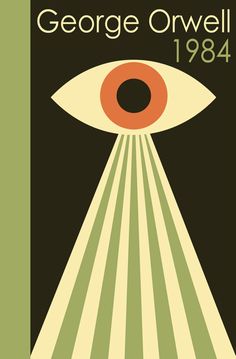
Orwell’s “1984”–The Divine Tragedy

Dante Alighieri’s Comedy and George Orwell’s 1984. The Comedy on it’s veneer is the tale of a backslider’s return to God and 1984 is the tale of backslider’s return to the State (the Party).

In 1984, Virgin Films & Umbrella-Rosenblum Films produced a movie version of Nineteen Eighty-Four. It was close enough to the book to appreciate; save for the omission of my favourite line from the book:

“We control matter, because we control the mind” (1984, book 3, chapter 3).

Aside from that, the short clip below from the movie will suffice to demonstrate my main point. The clip begins after the protagonist Winston has been successfully rehabilitated via torture:

(I edited the clip to begin at 5:25. End the video when the credits roll)

https://youtu.be/BjDg3lQGmRs?t=5m25s


Save for one detail, the clip from the movie mirrors the end of the book. The end of 1984 is a twisted version of the end of Dante’s Paradiso. I could give a line-by-line comparison of the end of both books, but it is much easier to paraphrase:

Dante stares at the three-fold circles of the Trinity.                                                          Winston stares at the news on television screen.

Dante sees an effigy of a man (Jesus Christ) appear in the 2nd circle of the Trinity.      Winston sees a man (Big Brother or BB) appear on the television screen.

Dante is given understanding to answer the mystery of how man fits in with God. Winston finally understands the mystery of the smile under BB’s mustache (book only).

Dante is filled with love for God.                                                                                                        Winston is filled with love for Big Brother.

I used Paradiso as the first example, but 1984 is an inversion of the entire Comedy.

Winston’s inferno begins with Julia (Beatrice)–he has a “fire in his belly.” Shortly thereafter, that’s when the antagonist O’brien introduces himself. BTW–O’brien is the bizarro-world Virgil.

Virgil accompanies Dante from the beginning of Inferno to the top of Mount Purgatorio. The top of Mount Purgatorio is the terrestrial paradise–that would be called “Room 101” in 1984. O’brien guides Winston through his inferno to Room 101. Notice how Winston envisions beautiful rolling hills in association with Room 101? In the Comedy, Virgil stops and delivers many discourses; so to with O’brien and his discourses in the 1984.

Virgil’s greatest discourse comes in Canto XVII of Purgatorio–his discourse on love. Here is a famous portion of the discourse from the Longellow translation of the Comedy:

“Hence thou mayst comprehend that love must be
The seed within yourselves of every virtue,
And every act that merits punishment” (Purgatorio, 17.102-105)

O’brien delivers a parody of Virgil’s discourse on love:

“We shall abolish the orgasm. Our neurologists are at work upon it now. There will be no loyalty, except loyalty towards the Party. There will be no love, except the love of Big Brother” (1984, Book 3, Chapter 3).

O’brien’s discourses come while he is torturing Winston. He parody’s discourses on love, freewill & the soul found in the Comedy.

In the Comedy, the Roman poet Statius joins Dante & Virgil in the 5th Circle of Purgatorio and accompanies them to the top of the mountain. Orwell is a great writer and didn’t leave out Statius; he named him Parsons. Lo and behold, we meet Parsons early in the book, he also ends up in the holding cell with Winston and he completes the journey to the terrestrial paradise or Room 101.

In Purgatory  the shades are purged of their vice; they must perform the opposite–if gluttony, then fasting. At the Ministry of Love thought criminals are purged of their thought crimes; they must confess the opposite.

In 1984, Goldstein is Satan or Dis. Although Winston ends up illegally making love to Julia several times, he hasn’t reached the lowest circle of Inferno yet–treachery. That happens when he reads Goldstein’s book; that’s treachery against the Party.

There are many, many more details, but the blog has shown you enough. You can have fun finding more parallels on your own. In conclusion, Orwell’s 1984 is a genius work of parody, which is why I call it The Divine Tragedy.
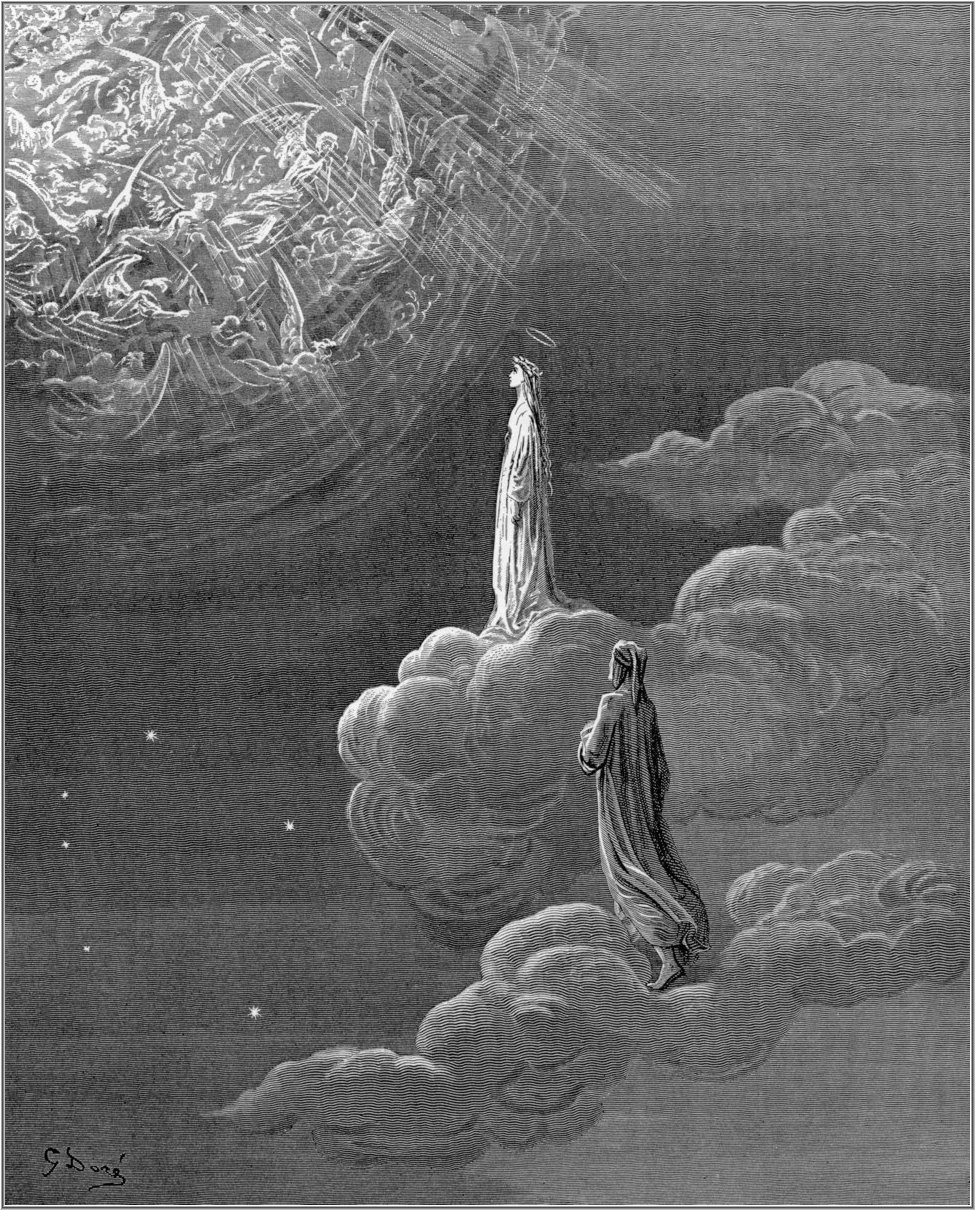
 

Dante Alighieri


I wrote my college thesis on the works of Dante Alighieri (c. 1265-1321). If I were to create renaissance currency, I would place Dante on the $100 bill. Proto and later Renaissance figures looked up to him. Even Rodan’s sculpture, The Thinker was originally The Poet in the Gates of Hell.

Not only should Dante be considered the leading proto-Renaissance figure, but also a proto-Reformer. Thus, don’t be scared off by Dante if you are a Protestant like me. Dante may not generally be placed at the forefront of both the Renaissance & The Reformation because the Black Plague struck Italy a few decades after he died. This left a gulf between Dante and later well-known figures.

Here are some interesting things that are not well known about his works:

Dante did not label his Comedy, divine (the label was applied nearly two centuries after his death). Dante resided in the court of a noble named Cangrande when he wrote Inferno & Purgatorio. He resided in the court of Guido Novella when he wrote Paradiso. However, Dante sent Cangrande a copy of Paradiso and a letter, which provided his own title for the complete work:

“The title of the book is ‘Here beginneth the Comedy of Dante Alighieri, a Florentine by Birth, but not in character’” (1).

Dante certainly wasn’t ignorant of the Bible. In his works he quoted the Bible far more than any other source. One must understand his work is not doctrine, it is a poem. Dante mentions the “third heaven” from 2 Corinthians 12:2 in Chapter XIV of The Convivo. His heavens were set in three major divisions, the stars (planets), the Milky Way and God.

Also, understand Dante’s use of poetic allegory. Dante said in Chapter XIV of The Convivo: “I say that by heaven I mean science, and by the heavens the sciences…” From there he compared each of his poetic heavens later used in Comedy to the classical liberal arts:

Circle of Paradiso Convivo
The Moon Grammar
Mercury Dialectic
Venus Rhetoric
The Sun Arithmetic
Mars Music
Jupiter Geometry
Saturn Astronomy
The Fixed Stars Physics/Metaphysics
Primum Mobile Moral Science
Empyrean Divine Science

What follows were some of the conclusions from my thesis:

Dante’s Comedy is his poetic autobiography. I performed a comparative analysis of his much earlier autobiographical work Vita Nuova to his Comedy. I concluded that Vita Nuova was an embryonic version of Inferno & Purgatorio.

Dante’s heavens or the classical liberal arts (the Trivium, Quadrivium & Theology) were the subjects that brought him happiness after his exile. In Paradiso, Dante is guided by Beatrice. Her appearance becomes more brilliant & glorious with each new circle of Paradise. That represents the light & joy Dante received from studying each subject–the greatest resulting from Divine Science or Theology. His Comedy ends with his future death or ultimate return to God.

Thus, the stages and characters of the Comedy are just as much based off the crime, punishment & reward of some as it is encounters & circumstances from Dante’s real life timeline. There is a mix of characters for those two reasons. Beatrice was Dante’s  Inferno. The walls of the city of Dis separated his condition before & immediately after Beatrice’s death. You could say it separated his obsession & depression. For instance, Dante contemplated suicide after her death (the 7th Circle–violence).

 I learned in Vita Nuova that Dante was intrigued with the number 9. He associated that number with Beatrice in several entries. Guess what–the inferno has 9 circles. So now you know why Dante (I say again–who knew the Bible well) placed 10 heavens & 9 hells in his poem.

Before I conclude, here is some bonus material from my comparative analysis of Vita Nuova & the Comedy: Dante’s poetic treachery. I believe Virgil represents Dante’s poetry in the Comedy. Who sent Virgil to guide Dante–Beatrice. Who inspired Dante’s first poetry–Beatrice. In Vita Nuova all Dante’s poetry was inspired by Beatrice (muse) until…

Something before I continue that is related; in Inferno all the rivers mentioned fall & converge in its lowest circle Cocytus (treachery). The bodies of water become frozen. This represents Dante’s frozen tears over Beatrice.

I believe Cocytus is reflected late in Vita Nuova when Dante returns to a familiar spot in Florence to sulk over Beatrice’s passing. He notices a fair, young woman staring at him from behind a window. Because of the pity in her eyes she temporarily becomes Dante’s new muse. Treachery! There can be only one muse! Vita Nouva concludes with Dante’s vision of the heavenly Beatrice. Dante rejects the anti-muse & finally escapes his real life hell.

Beatrice represented the things that brought Dante joy. At first it was Beatrice in the flesh; later it was Beatrice or Lady Philosophy. He called his anti-muse pity. It was joy vs pity and like Cocytus, Dante could have been frozen in a state of desiring pity forever.

A clue to Dante’s treachery is found in the Comedy when he finally reunites with Beatrice atop Mount Purgatorio. Beatrice chastises him–to include:

“As soon as ever of my second age [her death]
I was upon the threshold and changed life,
Himself from me he took and gave to others.” (Purgatorio 30.124-126)

I have much more to say about Dante & his works, but I hope you enjoyed this small offering.


(1) Pg 196, Toynbee, Paget , Dante Alighieri: His Life and Works, Dover Publications Inc.