The Lord of the Rings (Interpretations)

The following are my interpretations regarding a few routinely discussed subjects from The Lord of the Rings.

THE RING OF POWER

For decades those who appreciate JRR Tolkien’s literary works have debated if the ring of power is an allegory. It is not, the ring of power represents power, but the thought that there is a hidden meaning is still a correct line of thought. The hidden meaning of the general term power lays hidden in individuals or in this case the ringbearers.

What is power? Knowledge? Strength? Wealth? Authority? Attractiveness? Liberty? Alas, the subjectivity of power is what causes the debate. Thus, the ring of power grants different powers to different users save for the standard powers of invisibility & life extension. Why are those the two standard features for the ring of power?

–Life extension is one of the most common desires

–The power of invisibility probably offers one the greatest temptations to do evil

To elaborate on the last point–how would the average person utilize invisibility? Perhaps frightening other people, cheating, invading other’s privacy or a multitude of potential crimes–petty or grievous.

GOLLUM & THE RING

Back to the subjectivity of power–what was the power Smeagol/Gollum sought? Although I love every Peter Jackson rendition of the series, one could not glean the power Gollum lusted after on the big screen–the ring was simply precious to creature in the movie.

We learn from The Fellowship of the Ring novel (TFOTRN) that Smeagol not only lusted after a specific branch of knowledge (for power), but he was also Gollum before Gollum physically manifested due to the ring:

“He was interested in roots and beginnings; he dived into deep pools; he burrowed under trees and growing plants; he tunnelled into green mounds; and he ceased to look up at the hill-tops, or the leaves on trees, or the flowers opening in the air:  his head and his eyes were downward.”

The quote concerns Smeagol before the ring of power. That lust did not cease after he murdered his cousin Deagol in order to acquire the ring. Yes, Gollum hated sunlight, but that was not his entire motive for his retreat into the caves of the Misty Mountains. Gollum believed that the roots of the mountains certainly held a multitude of secrets regarding roots & beginnings. Gandalf informs us of the end of Gollum’s endeavor in TFOTRN:

“All the ‘great secrets’ under the mountain had turned out to be just empty night:  there was nothing more to find out, nothing worth doing, only nasty furtive eating and resentful remembering.”

There is more to Smeagol’s backstory in the novel, but two key points in conjunction with the ring of power: 1) Gollum essentially became invisible without the aid of the ring; he chose to live in isolation. 2) Instead of acquiring secret knowlege & becoming wise, Gollum became base, uncivilized and closer to a beast than his hobbit-kin.

The 2nd point highlights the malevolence of the ring of power in that it grants the opposite of the power a ringbearer seeks.

As the concept of power is different to different people & the ring grants power (attached to malevolence) according to stature; beings like Gandalf & Galadriel had to reject the ring for the sake of the world. Their great magnified powers would have only wreaked mass destruction in the end–regardless of their motives.

FRODO & THE RING

As mentioned, while Gollum did have other motives an obsession with the ring is a common side effect for all ringbearers. Whether people desire to do good or evil, many covet power in order to accomplish those ends. However, Bilbo & Frodo Baggins didn’t seek power–so why were they obsessed with owning the ring?

Answer: The greatest power that allowed them to resist the seductions of the ring was what was exploited in them by the ring–contentment. Hobbits love good tilled earth, gardening, drinking, smoking, comfort, but most of all peace & quiet. They don’t like adventure; they don’t like change. Their desires are simple; they are easily contented–which means (in the tongue of Mordor >) they can put up with much more crap than the average humanoid.

For the hobbits, getting rid of the ring of power would cause the disruption. Frodo’s contentment (conservativism) got the better of him–he became used to the ring. Getting rid of the ring meant change & Frodo couldn’t toss the ring into the cracks of Mount Doom in the end–he required an unintended assist from Gollum.

Frodo’s precious was sacrificed–contentment. When it was all said & done, Frodo was no longer content with life back in the Shire. He sacrificed contentment so hobbits in the Shire could live on & be content.

TOM BOMBADIL

Now to drop the bomb, Bombadil that is. A long held question for Tolkien fans is the purpose for the novel-only character. Many commentators suggest that Gollum is a mirror image of Frodo–so is Tom. It is actually Bombadil who is Gollum’s complete opposite.

Everything Smeagol/Gollum forsook is what Tom sang & gloried about. Smeagol ceased to look up at the hill-tops while Tom leaped on hill-tops. Tom sang & gloried about: the sunlight, the moon, the stars, the weather, trees, leaves, flowers & love–everything that Gollum hated.

Gollum loved an object–his precious was the ring. Tom’s precious was a person–Lady Goldberry. One of the tragedies of Gollum was unrequited love–the ring did not want him.

The juxtapositions do not stop there. Smeagol/Gollum lusted after knowledge of roots & beginnings, but it was not to be found in deep pools, buried in mounds or hidden in the roots of the Misty Mountains. That knowledge was wrapped up in a person–Tom Bombadil. Tom’s description of himself from TFOTRN:

“Eldest, that’s what I am. Mark my words, my friends:  Tom was here before the river and the trees; Tom remembers the first raindrop and the first acorn.”

Tom was the first living thing in middle earth, not living person–living thing. He was there before the Ents, the Big People or the little people popped up. He was also there before the Elves or Sauron rolled in. Tom had all the knowledge (roots & beginnings) Smeagol lusted after. Smeagol’s desired use for any knowledge was power–for instance he used the ring to acquire secret & hurtful things about his own kin in the novel. To Tom knowledge had intrinsic value.

Gollum was obsessed with the ring while Tom had zero use for it & it had zero affect on him. Tom could see Frodo when Frodo put on the ring. Also, while the ring makes people disappear, Tom momentarily made the ring disappear. At the council of Rivendell it was suggested that they give the ring to Tom for safekeeping, but Gandalf ruled that out because he thought Tom would put the ring somewhere & simply forget about it. Gollum could never forget about the ring.

While Gollum strove to evade all people & resided in a dark cave; in TFOTRN Lady Goldberry tells us of Tom:

“No one has ever caught old Tom walking in the forest, wading in the water, leaping on the hill-tops under light and shadow. He has no fear.”

Gollum lived in fear, isolation & snuck around–but was found. Tom routinely sang, leaped & danced out in the open–could never be caught.

Tom & Gollum are juxtaposed in their physical appearances. Gollum was darker than darkness or essentially colourless, big pale eyes, gangly & had abandoned clothes. Tom had a ripe flush face, thick legs, big blue eyes & dressed overboard–colorfully.

The characters routine speech patterns were juxtaposed. Tom essentially spoke in smooth poetry. Gollum spoke choppily–not only due to illogically interjecting “precious” often, but primarily because of the routine gollum noise made by his gulping + hacking. While Gollum, gollumed–Bombadil, dilloed. When Tom inserted an illogical word like “dillo” it wasn’t an interuption–it allowed for his poetry or songs to flow more smoothly.

Hopefully I have provided enough evidence that Tom Bombadil is the polar opposite of Gollum–Tom’s function, but what is the purpose for the character? Answer: the same as Gollum.

OF DANTE & TOLKIEN

Frodo is in the valley of decision or his potential character end:

Gollum (Frodo’s Inferno) <—<—< Frodo >—>—>Tom Bombadil (Frodo’s Paradiso)

Frodo’s encounter with Tom is his first experience outside of the Shire as far as the journey. Frodo does not begin in Purgatorio, just like Dante. The hobbits are in the old forest–they are lost in woods (and in trouble) before Tom shows up for a rescue:

“MIDWAY upon the journey of our life
I found myself within a forest dark,
For the straightforward pathway had been lost.”

Inferno 1.1-3

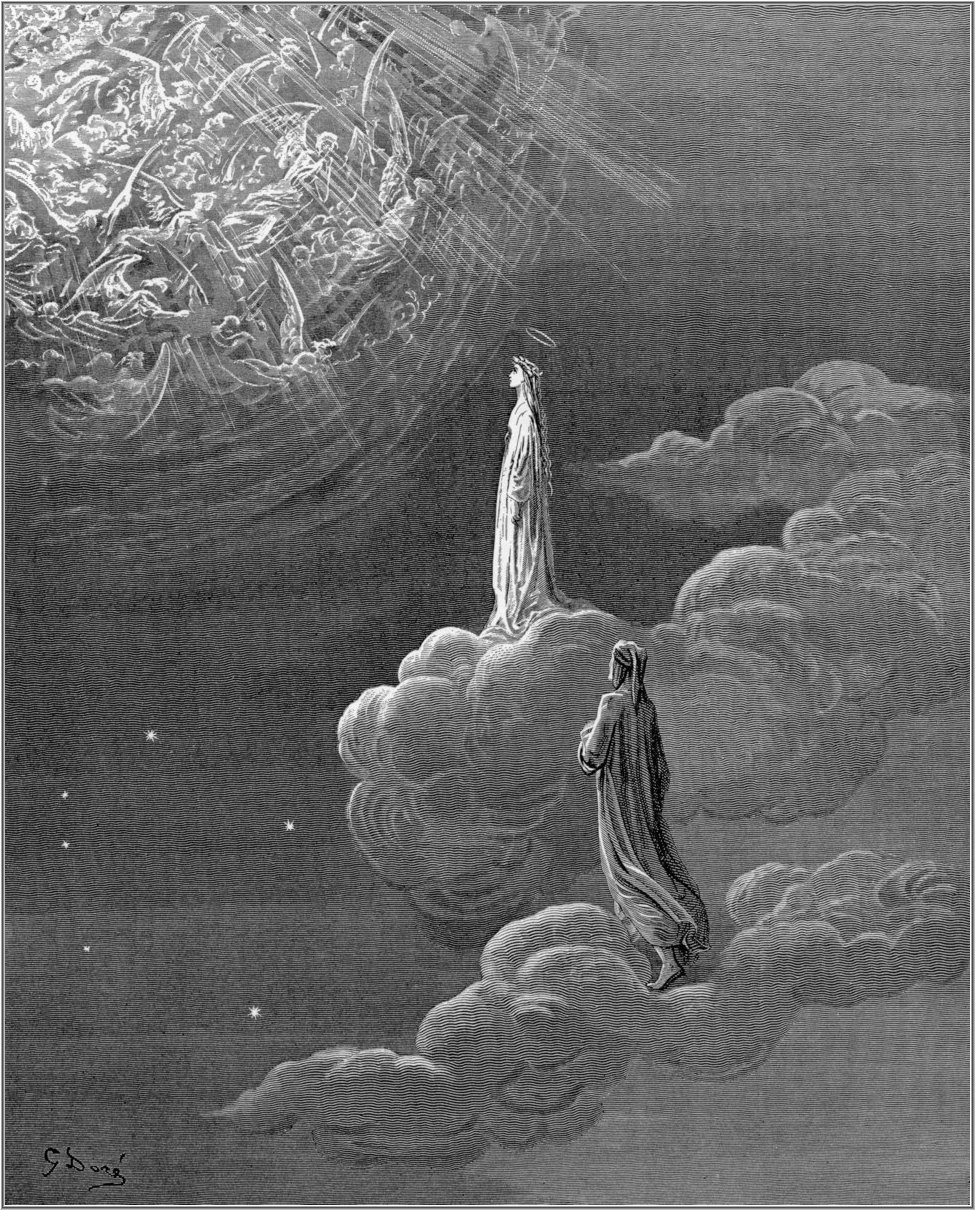
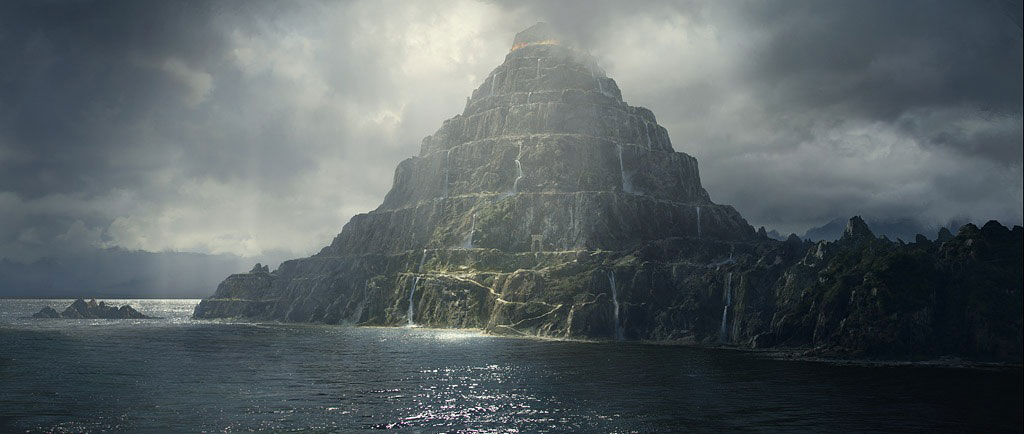
Just like Dante, Frodo must travel through the Inferno before Purgatorio. The Lord of the Rings (LOTR) does not end with Frodo traveling to Paradiso. He is going to travel with Gandalf & the Elves to the undying lands; however, he is still going to die. The undying lands are like the terrestial paradise atop Mount Purgatorio (not the celestial Paradiso).

The realm of Tom Bombadil or Paradiso is Frodo’s ultimate, desired end. It’s a timeless & most importantly with Tom–a problem free realm. Frodo had nothing but problems on his hands at that time (the ring). Lady Goldberry fulfills the role of Beatrice. It is Lady Goldberry who guides the hobbits (with her hand) out of Paradiso. Like Beatrice, Goldberry cannot guide Frodo through the Inferno or the terraces Mount Purgatorio–only Paradiso. BTW–Frodo was enthralled with Lady Goldberry, like Dante with Beatrice.

LOTR’s Virgil is Gollum. Virgil resides in Limbo (the 1st Circle of Inferno) & so had Gollum before the adventure. He spent the majority of his unnaturally long life alone in a cave–void of any hope or expectations.

Samwise Gamgee is like giving Statius (he joined Dante & Virgil on their journey in Purgatorio) an extended role. Gollum (like Virgil) disappears before Sam (like Statius). Statius is with Dante all the way to the end of Purgatorio.

Frodo could not journey to the undying lands & live, “happily ever after.” He will have the wounds from the adventure for the rest of his life–he’ll just be able to get along with them better in the undying lands.

Tolkien may have believed his magnum opus would be incomplete without at least a glimpse of heaven–hobbit heaven.

Tom Bombadil is hobbit heaven. The most comfortable life imaginable for a hobbit–cannot be caught, no fear out in the open, not only an appreciation for things that grow, but able to communicate with the environment. Nothing but comfort, eating, singing, joy & a beautiful Lady Goldberry who reciprocates love.

Gollum is hobbit hell. The most uncomfortable lifestyle imaginable for a hobbit. No warm hearth–a dark, dank cave. The worst food imaginable, no plantlife, no clothes, no light, constant fear of being caught & unrequited love (for an object).
Purgatorio–Turning Point (Virgil’s Discourse on Love)

Dante Alighieri’s Inferno is a fine standalone. Hell is thick, dark, exhausting & simply escaping it offers satisfaction enough for the majority of readers. There are more reasons people often vacate The Comedy at Purgatorio. If one continues to climb Mount Purgatorio it is at Canto 51 & 52 (of 100) that we reach the turning point or prime catharsis for Dante’s real life. Catharsis (Greek) & Purgatorio (Latin) are close to the same words.

The dilemma of the entire poem is love.  Dante had a secret, burning, never realized, thus unrequited love for Beatrice. Also take into account his later exile from the city of Florence. On top of that, consider that Dante poetically tells us in the first three lines of the book that he was in the midst of most likely a PTSD episode or emotional time travel event (love madness or obsessive love can manifest due to PTSD). All the former emotions from Dante’s Vita Nuova time period may have flooded back in coupled with the emotions from his recent exile.

I must point out that Dante’s Limbo is the first circle of the Inferno because that is the initiation for a similar experience to Dante’s. The modern usuage of “Limbo” is not knowing something or waiting for an answer–incorrect according to Dante’s usage. His Limbo is a constant desire coupled with the tormenting knowledge that there is no hope of fulfillment:

“For such defects, and not for other guilt,
Lost are we and are only so far punished,
That without hope we live on in desire.”

Inferno 4.40-42

Dante may have been experiencing a PTSD duality when he began writing  The Divine Comedy as they call it, but the proper title per Dante “Here beginnith the comedy of Dante Alighieri, a Florentine by birth, but not in manners”:

“MIDWAY upon the journey of our life”

Inferno 1.1

It is our (plural) life (singular). It is not our lives because Dante is not including our lives in the equation, but the separate parts of his life, to wit–him from sometime from the past occupying the same space as him from the present.This time-travel duality was best reflected by Dante in Inferno 8 & 9. The cantos reflect emotional events from two distant times in Dante’s life. Both events are portrayed just outside the walls of the city of Dis.

The walls of Dis separate the Inferno’s 5th & 6th Circles. The 5th Circle is the punishment for the Irascible & the Sullen or those overcome by bitterness–wrath. Both real life events (Beatrice & Exile) threatened to leave Dante in a stasis–bitterness. In the poem both events attempt to permanently halt his journey in the circle of wrath.

Inferno 8 reflects the emotions from Dante’s exile. The city of Dis is a hellish representation of the city of Florence (IE it has mosque towers instead of Christian spires). When Dante & his guide Virgil reach the walls of the city, the denizens on top of the wall state that Virgil can come in, but Dante cannot pass. Virgil is the symbol for Dante’s poetry. Florence wanted the poetry (or an association with it), but not the poet. Dante could have been in a perpetual state of bitterness over his exile.

Inferno 9–we are still outside the walls of Dis. This canto reflects the emotions from Dante’s episode in Vita Nuova XIV. In the Inferno, three Furies land on the mosque towers & call for Medusa to turn Dante into stone–a transfiguration. In Vita Nuova XIV, Dante was neck deep in his love madness for Beatrice. His friend invited him to what was allegedly a simple gathering of lovely women–he did not even know Beatrice would be there.

The entry & sonnet are slightly ambiguous, but the historian Boccaccio believes it was a small wedding reception dinner. The new bride–Beatrice. At the sight of Beatrice & her love interest, as Dante puts it, he suffered a transfiguration. He became pale & sickly. A few of the women at the gathering (The Furies) & Beatrice (Medusa) began to giggle & mock Dante for his sickly appearance. Dante was mocked by the woman he loved during a great moment of suffering. Again, Dante could have been perpetually bitter over the matter.

“You join with other ladies to deride me
and do not think, my lady, for what cause
I cut so awkward and grotesque a figure…”

Vita Nuova XIV, 1-3

Dante & Beatrice’s reciprocal relationship prior to his transfiguration, according to Dante, was nothing more than Beatrice giving Dante one friendly greeting on the street (love madness). It was a long, secret, building, burning love I had for a woman that initiated my event. Like Dante with Beatrice, I fell in love with her at first sight, but it was a long time before any association. At best, it’s climax, the relationship was only an association between us in the setting of a formal environment.

It was so much more to me because the long building secret desire (Proverbs 27:5). Once the association went south, even though it never actually went north, I had heard 2nd hand that she claimed, “We were never even friends.” You can be frozen in a state bitterness over such a thing.

Once you are able to resume a fully functional state after a bout with love madness or unrequited love, you desire answers. It is apparent Dante long sought answers to the same questions I had.

When we feel the true emotion of love, we believe it is automatically good. But if it is good, how could it lead us into disaster? How can the recipient hate it so much? Was a person’s love madness a simple pride problem instead? Most importantly–was it actually love?

In Inferno, sin is punished. In Purgatorio, vice is purged. Both realms have circles of wrath. Dante spends much time & was halted before leaving the circles of wrath in Inferno & Purgatorio. It is Purgatorio’s circle of wrath where Virgil provides the discourse on love. This discourse provides Dante with some answers to questions I posted in the paragraph above:

“Hence thou mayst comprehend that love must be
The seed within yourselves of every virtue,
And every act that merits punishment.”

Purgatorio 17.103-105

“The natural was ever without error;
But err the other may by evil object,
Or by too much, or by too little vigour.”

Purgatorio 17.94-96

“Now may apparent be to thee how hidden
The truth is from those people, who aver
All love is in itself a laudable thing,

Because its matter may perchance appear
Aye to be good; but yet not each impression
Is good, albeit good may be the wax.”

Purgatorio 18.34-39

I love the allegory of the wax. The wax is love & good nonetheless–regardless of the impression (seal) in it.

Love in itself, is intrinsically good. Enter the object/subject of that love (John 3:19) or the degree in respects to a certain object/subject. During my event, which included the unrequited love, those I told said it was obsession. I was offended by the claim & countered that it was love. We were both right according to Dante. Love madness is love…but it’s not destiny. There is the rub–the thought that it must destiny due to the personal strength of the emotion.

In conclusion, if you suffer through obssession or love madness (I consider the latter a more accurate label), even if it is or isn’t a byproduct of something else–you want some answers. Is loving someone who doesn’t love you (or doesn’t return it to nearly the same degree) some sort of crime? No, because who can understand the subject of unrequitted love better than God?

John 1:11 “He came unto his own, and his own received him not.”

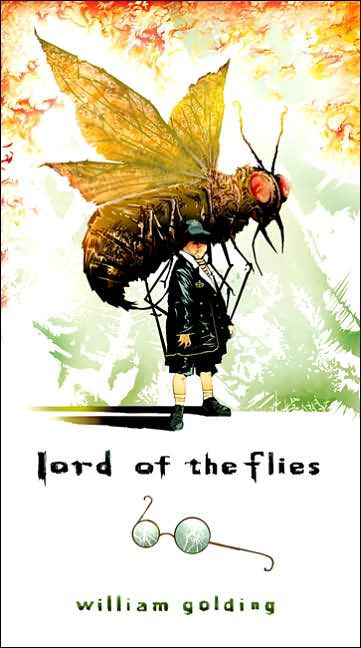
“The Lord of the Flies”–Symbols

Often in our increasingly godless society, entities attempt to hide Biblical allusions that can be found in classic literature. The 1980’s motion picture The Lord of the Flies was decent, but from my perspective it set out to force a civic-minded-only interpretation of the book. For instance, instead of a beast–it was always referred to as a monster. Also their monster arrived & developed under completely different circumstances–which destroyed the Biblical symbolism that I believe William Golding obviously intended.

All civic-minded interpretations aren’t wrong; Golding wrote himself that a theme in the book was that political systems didn’t matter as far as society; only the ethical nature of individuals.  The purpose of this blog is identify the Biblical allusions I perceived in Golding’s The Lord of the Flies:

Piggy’s glasses: The lenses represent the two tablets of the Ten Commandments. The glasses are the only means of lighting a fire on the island; thereby, the only source of light. One lens is broken early in the novel. This represents the absence of the first tablet or Commandments 1- 5. The first four commands deal with man’s relationship to God and the 5th is to honour your mother & father. There is no mention of God nor are their any adults (parents) on the island. When the boys establish their first (old) covenant on the mountain, their is no mention of God, the Bible or their parents when they make the laws. The boys are left with only one lens; Commandments 6-10, or how to love your neighbor. The battle for Piggy’s one lensed glasses represent the battle for control over morals on the island of neighbors.

Ralph & Piggy: Their relationship represents Aaron & Moses. Moses was worried about his stutter so God told him to have Aaron speak for him. When Piggy spoke he was always derided by the other boys; therefore, Ralph often delivered Piggy’s practical ideas to the assemblies instead. Piggy does not fully actualize the person of Moses, but some elements are present.

Jack: The main antagonist represents the beast from the sea. In the chapter named Beast from Water, an assembly is held at the shallow lagoon. Jack openly disrespects the law of the conch. The assembly is the first group mention a mythical beast on the island. Jack initially speaks against the beast tale, but as the novel continues more & more of his power relies on the beast myth. Later in the novel Jack attempts to democratically supplant Ralph as the leader of the group. When no one votes for Jack he is humiliated and cries. Figuratively, the beast from the sea was wounded. He leaves the group, but offers an open invitation for anyone to join his group. Initially only a few hunters follow him, but eventually his group includes everyone but Ralph, Piggy and a couple littluns. Jack can offer meat via the hunt, but not a continuous fire. He leads a raid to steal Piggy’s glasses. This represents that Jack now holds the power, via power, to direct the moral law on the island (one lens–Commandments 6-10). Eventually the law on the island degenerates into Jack’s power & his power and authority (his justifications) by the end of novel derive only from the beast from the air. For instance, the final hunt for Jack’s group is Ralph. Jack’s call to hunt Ralph contains zero moral justification & he has nothing to gain. He controls all the other boys on the island & has Piggy’s glasses. His only justification is that Ralph will be a sacrifice to the beast.

The Corpse of the Pilot: The corpse represents the dragon or the beast from the air. The book is set presumably during WWII. In the chapter Beast from Air, there is an aerial battle near the island. A pilot’s plane is shot down; he ejects & deploys his parachute, but dies from his wounds before he lands on the island. His corpse lands on the mountainside & his parachute is snagged on some rocks. Whenever the wind blows and catches the snagged parachute, the strings pull on the corpse and animate it in an odd manner–a twisted beast like leviathan. The boys only see the corpse & parachute in the dark or from afar. All the boys believe it is the beast–the earlier myth is confirmed in their minds. Of the whole event: there was war in heaven & Michael & his angels cast out the dragon & his angels. Thus, the fallen corpse represents the fallen dragon. In the Bible the dragon gives the beast from the sea his seat, power & authority.

Simon: Plays the role of a Christ-like figure. When Jack & the few hunters initially broke off from the main group, Simon witnessed their first hunt while he was concealed in the bush. Jack cuts off the head of the boar & places it on a pike. After Jack’s group sets up the first sacrifice for the beast, his group scurries off with the pigs body. Simon remains concealed & contemplates why the beast doesn’t claim his sacrifice. Flies swarm the boars head & Simon approaches it. The boar’s head is called the Lord of the flies by the narrator & Simon hallucinates that it speaks to him. The Lord of flies tells Simon that attempting to kill him (the beast) is folly & that there is a part of him in Simon & every man. The monologue indicates that Simon should not resist the beast within. This represents the temptation of Christ. Simon leaves the boar’s head & travels up the mountain (he injures his leg along the way). He encounters the beast from air & learns the truth: it is a corpse of a pilot. Simon staggers back to the group as fast as possible. He is the only one who knows the truth & if he can deliver this truth it will be like delivering a new covenant. Early in the novel all the boys established the first laws (old covenant) on the mountain, but now their behaviour & code was influenced more by the beast myth than anything else. Simon arrives on the beach during an inter-group pow wow. It is dark, a storm is raging, the boys are performing a pagan pig-stabbing dance & Simon crawls out of the forest. The boys mistake him as the beast & murder him. The storm winds had freed the parachute & corpse from the rocks. Immediately after the boys murdered Simon, the pilot corpse floated into their midst. They all fled in terror. In the movie the boys knew they murdered Simon, but in the novel they never knew they murdered Simon. After the boys flee, the pilot corpse & Simon are dragged out to sea.

The Conch: At first the conch is a symbol of the first moral law on the island. You could only speak during an assembly if you hold the conch. Later the conch is an idol or the molten calf. After Jack’s group steals Piggy’s glasses, Piggy still has faith in the power of the conch. He proposed that he & what is left of Ralph’s group will march over to Jack’s group & demand the return of his glasses. Piggy believes that Jack must hear him because of the power of the conch. With the conch in hand Piggy will tell Jack, “What’s right’s right.” When Ralph’s group does march over, there is scuffle, but Piggy temporary quells the struggle by yelling that he holds the conch & must be heard. He raises the conch aloft & begins his discourse. During his discourse, some hunters on a higher cliff roll a boulder off the edge. It not only strikes and kills Piggy, but also smashes the conch into a thousand pieces. This sequence represents Moses smashing the tablets of the Ten Commandments & grinding the molten calf into powder. Moses himself is not represented in the boys struggle. Piggy is the first deliberate murder on the island–there is no longer any law on the island written in stone. The conch is the grounded idol. The conch, the molten calf in this tale is faith in a system created by men.

The Soldier on the Beach: The absence of adults on the island represents the absence of God from a civilization. The soldier on the beach represents the unexpected return of God. Jack’s group engages in their final hunt–they hunt Ralph. After evading the hunters Ralph stumbles on the beach & encounters an adult soldier. The hunters emerge from the forest behind. When all the boys see the adult soldier on the beach, they begin to realize their state of total depravity. A civic irony Golding provided himself is that while the adult saved the boys from their war–he was also in the midst of a war. The adults were in a war over their own molten calf (political systems).

Ralph: His early status is covered; he is loyal to the old covenant, but by the end of the book he is transformed & represents the end time saints who refuse to worship the beast. He never loses faith that adults (God) will return.

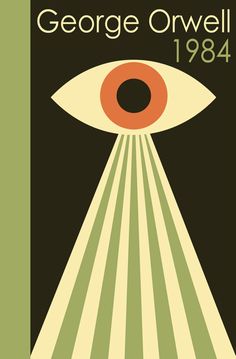
Orwell’s “1984”–The Divine Tragedy

Dante Alighieri’s Comedy and George Orwell’s 1984. The Comedy on it’s veneer is the tale of a backslider’s return to God and 1984 is the tale of backslider’s return to the State (the Party).

In 1984, Virgin Films & Umbrella-Rosenblum Films produced a movie version of Nineteen Eighty-Four. It was close enough to the book to appreciate; save for the omission of my favourite line from the book:

“We control matter, because we control the mind” (1984, book 3, chapter 3).

Aside from that, the short clip below from the movie will suffice to demonstrate my main point. The clip begins after the protagonist Winston has been successfully rehabilitated via torture:

(I edited the clip to begin at 5:25. End the video when the credits roll)

https://youtu.be/BjDg3lQGmRs?t=5m25s


Save for one detail, the clip from the movie mirrors the end of the book. The end of 1984 is a twisted version of the end of Dante’s Paradiso. I could give a line-by-line comparison of the end of both books, but it is much easier to paraphrase:

Dante stares at the three-fold circles of the Trinity.                                                          Winston stares at the news on television screen.

Dante sees an effigy of a man (Jesus Christ) appear in the 2nd circle of the Trinity.      Winston sees a man (Big Brother or BB) appear on the television screen.

Dante is given understanding to answer the mystery of how man fits in with God. Winston finally understands the mystery of the smile under BB’s mustache (book only).

Dante is filled with love for God.                                                                                                        Winston is filled with love for Big Brother.

I used Paradiso as the first example, but 1984 is an inversion of the entire Comedy.

Winston’s inferno begins with Julia (Beatrice)–he has a “fire in his belly.” Shortly thereafter, that’s when the antagonist O’brien introduces himself. BTW–O’brien is the bizarro-world Virgil.

Virgil accompanies Dante from the beginning of Inferno to the top of Mount Purgatorio. The top of Mount Purgatorio is the terrestrial paradise–that would be called “Room 101” in 1984. O’brien guides Winston through his inferno to Room 101. Notice how Winston envisions beautiful rolling hills in association with Room 101? In the Comedy, Virgil stops and delivers many discourses; so to with O’brien and his discourses in the 1984.

Virgil’s greatest discourse comes in Canto XVII of Purgatorio–his discourse on love. Here is a famous portion of the discourse from the Longellow translation of the Comedy:

“Hence thou mayst comprehend that love must be
The seed within yourselves of every virtue,
And every act that merits punishment” (Purgatorio, 17.102-105)

O’brien delivers a parody of Virgil’s discourse on love:

“We shall abolish the orgasm. Our neurologists are at work upon it now. There will be no loyalty, except loyalty towards the Party. There will be no love, except the love of Big Brother” (1984, Book 3, Chapter 3).

O’brien’s discourses come while he is torturing Winston. He parody’s discourses on love, freewill & the soul found in the Comedy.

In the Comedy, the Roman poet Statius joins Dante & Virgil in the 5th Circle of Purgatorio and accompanies them to the top of the mountain. Orwell is a great writer and didn’t leave out Statius; he named him Parsons. Lo and behold, we meet Parsons early in the book, he also ends up in the holding cell with Winston and he completes the journey to the terrestrial paradise or Room 101.

In Purgatory  the shades are purged of their vice; they must perform the opposite–if gluttony, then fasting. At the Ministry of Love thought criminals are purged of their thought crimes; they must confess the opposite.

In 1984, Goldstein is Satan or Dis. Although Winston ends up illegally making love to Julia several times, he hasn’t reached the lowest circle of Inferno yet–treachery. That happens when he reads Goldstein’s book; that’s treachery against the Party.

There are many, many more details, but the blog has shown you enough. You can have fun finding more parallels on your own. In conclusion, Orwell’s 1984 is a genius work of parody, which is why I call it The Divine Tragedy.


Dante Alighieri


I wrote my college thesis on the works of Dante Alighieri (c. 1265-1321). If I were to create renaissance currency, I would place Dante on the $100 bill. Proto and later Renaissance figures looked up to him. Even Rodan’s sculpture, The Thinker was originally The Poet in the Gates of Hell.

Not only should Dante be considered the leading proto-Renaissance figure, but also a proto-Reformer. Thus, don’t be scared off by Dante if you are a Protestant like me. Dante may not generally be placed at the forefront of both the Renaissance & The Reformation because the Black Plague struck Italy a few decades after he died. This left a gulf between Dante and later well-known figures.

Here are some interesting things that are not well known about his works:

Dante did not label his Comedy, divine (the label was applied nearly two centuries after his death). Dante resided in the court of a noble named Cangrande when he wrote Inferno & Purgatorio. He resided in the court of Guido Novella when he wrote Paradiso. However, Dante sent Cangrande a copy of Paradiso and a letter, which provided his own title for the complete work:

“The title of the book is ‘Here beginneth the Comedy of Dante Alighieri, a Florentine by Birth, but not in character’” (1).

Dante certainly wasn’t ignorant of the Bible. In his works he quoted the Bible far more than any other source. One must understand his work is not doctrine, it is a poem. Dante mentions the “third heaven” from 2 Corinthians 12:2 in Chapter XIV of The Convivo. His heavens were set in three major divisions, the stars (planets), the Milky Way and God.

Also, understand Dante’s use of poetic allegory. Dante said in Chapter XIV of The Convivo: “I say that by heaven I mean science, and by the heavens the sciences…” From there he compared each of his poetic heavens later used in Comedy to the classical liberal arts:

Circle of Paradiso Convivo
The Moon Grammar
Mercury Dialectic
Venus Rhetoric
The Sun Arithmetic
Mars Music
Jupiter Geometry
Saturn Astronomy
The Fixed Stars Physics/Metaphysics
Primum Mobile Moral Science
Empyrean Divine Science

What follows were some of the conclusions from my thesis:

Dante’s Comedy is his poetic autobiography. I performed a comparative analysis of his much earlier autobiographical work Vita Nuova to his Comedy. I concluded that Vita Nuova was an embryonic version of Inferno & Purgatorio.

Dante’s heavens or the classical liberal arts (the Trivium, Quadrivium & Theology) were the subjects that brought him happiness after his exile. In Paradiso, Dante is guided by Beatrice. Her appearance becomes more brilliant & glorious with each new circle of Paradise. That represents the light & joy Dante received from studying each subject–the greatest resulting from Divine Science or Theology. His Comedy ends with his future death or ultimate return to God.

Thus, the stages and characters of the Comedy are just as much based off the crime, punishment & reward of some as it is encounters & circumstances from Dante’s real life timeline. There is a mix of characters for those two reasons. Beatrice was Dante’s  Inferno. The walls of the city of Dis separated his condition before & immediately after Beatrice’s death. You could say it separated his obsession & depression. For instance, Dante contemplated suicide after her death (the 7th Circle–violence).

 I learned in Vita Nuova that Dante was intrigued with the number 9. He associated that number with Beatrice in several entries. Guess what–the inferno has 9 circles. So now you know why Dante (I say again–who knew the Bible well) placed 10 heavens & 9 hells in his poem.

Before I conclude, here is some bonus material from my comparative analysis of Vita Nuova & the Comedy: Dante’s poetic treachery. I believe Virgil represents Dante’s poetry in the Comedy. Who sent Virgil to guide Dante–Beatrice. Who inspired Dante’s first poetry–Beatrice. In Vita Nuova all Dante’s poetry was inspired by Beatrice (muse) until…

Something before I continue that is related; in Inferno all the rivers mentioned fall & converge in its lowest circle Cocytus (treachery). The bodies of water become frozen. This represents Dante’s frozen tears over Beatrice.

I believe Cocytus is reflected late in Vita Nuova when Dante returns to a familiar spot in Florence to sulk over Beatrice’s passing. He notices a fair, young woman staring at him from behind a window. Because of the pity in her eyes she temporarily becomes Dante’s new muse. Treachery! There can be only one muse! Vita Nouva concludes with Dante’s vision of the heavenly Beatrice. Dante rejects the anti-muse & finally escapes his real life hell.

Beatrice represented the things that brought Dante joy. At first it was Beatrice in the flesh; later it was Beatrice or Lady Philosophy. He called his anti-muse pity. It was joy vs pity and like Cocytus, Dante could have been frozen in a state of desiring pity forever.

A clue to Dante’s treachery is found in the Comedy when he finally reunites with Beatrice atop Mount Purgatorio. Beatrice chastises him–to include:

“As soon as ever of my second age [her death]
I was upon the threshold and changed life,
Himself from me he took and gave to others.” (Purgatorio 30.124-126)

I have much more to say about Dante & his works, but I hope you enjoyed this small offering.


(1) Pg 196, Toynbee, Paget , Dante Alighieri: His Life and Works, Dover Publications Inc.