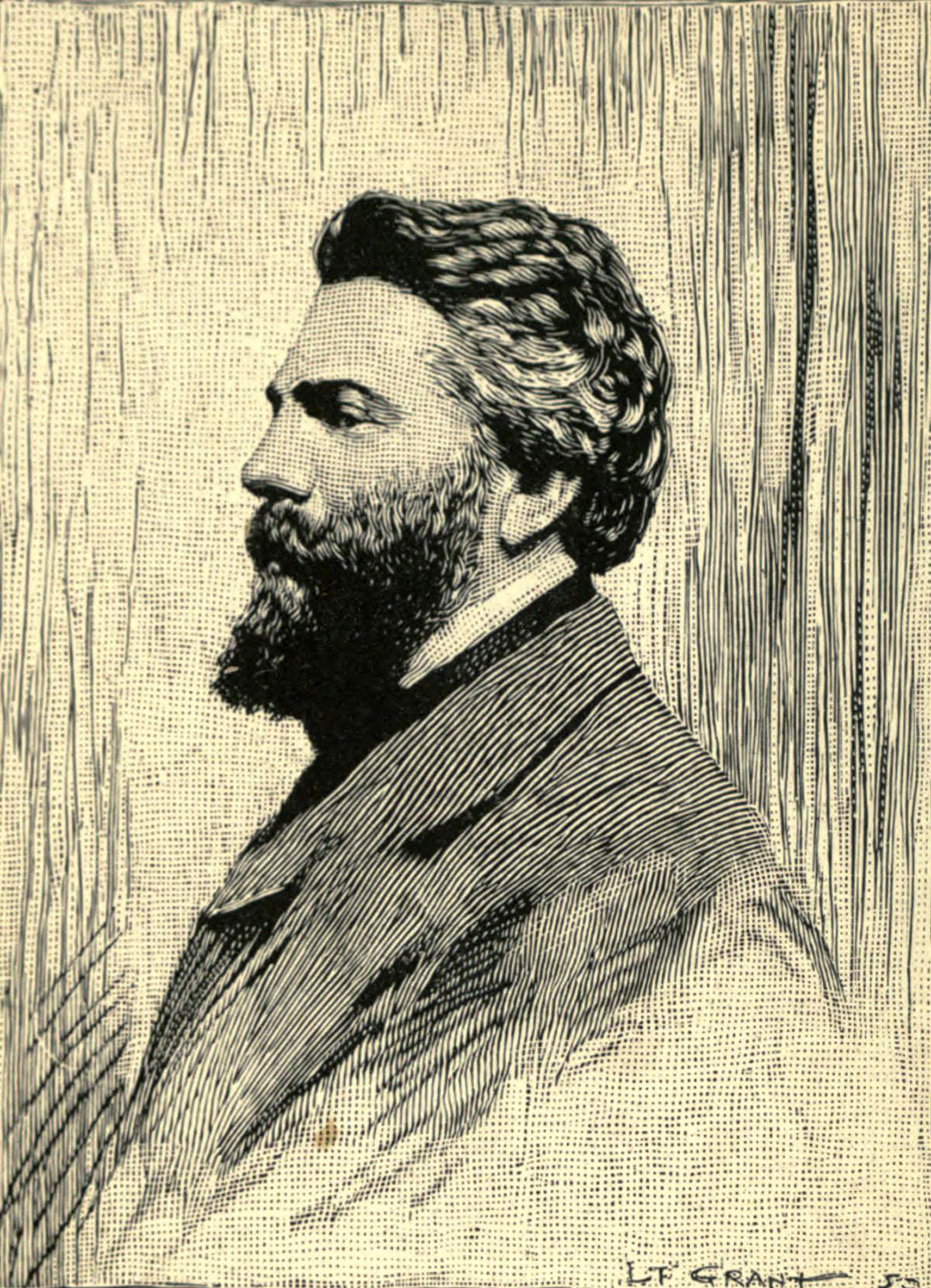
Herman Mellville’s The Paradise of Bachelors and the Tatarus of Maids (PBTM) is not technically a short story; more properly a comparative essay written in poetic prose. However, without Mellville’s nearly unrivaled style of poetic prose the essay would read like a sociology report from the 1850’s. As with most classic literature since the 14th Century, Herman tips his hat to Dante Alighieri–after all the work is Bachelors Paradise & Womens Cocytus:
“‘Why is it, Sir, that in most factories, female operatives, of whatever age, are indiscriminately called girls, never women?”
The unnamed main character (we’ll assume it’s Herman) asked his guide that question near the end of his tour of a paper mill. Before the question & answer is discussed later in this article, I will note the quasi-essay involves more than the living & working conditions of men vs women in the 19th Century–industrialization figures into the mix. The theme of the work might be the question of whether women on average were lead into a better or worse life because industrialization?
PBTM is divided into two parts as the title suggests. First Herman gives an account of visiting the Templars in London. He notes how the lives of Templar Knights have changed in the industrial age–for instance they exchanged, “the big two-handed sword” for a “one-handed quill.” Also, “The helmet is now a wig.” Essentially the modern knights are lawyers, scholars–the high society types. Mellville goes long with the comparison between the poor knights of yesteryear who defended the pilgrimage routes to Jerusalem versus the self-indulgent modern knights. Aside from the namesake, the only thing the new knights had in common with the old is that they were bachelors.
Herman visits the bachelors at a paradise-like abode near the Temple Bar. He ascends a building into a high meeting place; there was a feast, snuff, stories of travels, scholarly tales & Mellville noted that his time amongst the bachelors wasn’t measured by a “water-clock,” rather a “wine chronometer.” The only missing indulgence during the encounter was women.
We encounter women in part 2 of the essay. Herman needs an abundance of envelopes for his company & decides to purchase direct. His route to the paper mill includes passing through a, “Dantean gate”–a shortened version of, “All hope abandon, ye who enter in!” (Inferno 3.9, which what I quoted is also shortened version of what’s written above hell’s gate). Herman travels down “Mad Maid Bellows’ Pipe” until he reaches the mill; which is situated at the base of snow covered mountains.
Like the River Styx falling as a tributary for Cocytus; the mill is powered by the falling waters of “Blood River.” Intrigued by the glimpses of pale, blue faced women upon his arrival, after Herman completes his deal for the paper products with the owner he asks for a tour of the factory. Instead of Mellville being guided by Virgil, a knowledgeable factory hand called “Cupid” is his guide. The mill is a microcosm of all the circles in Dante’s Inferno. Women with expressions just as blank as the tables they sat at folded envelopes. Others served, “iron animals.” Some areas of the factory are intensely hot; others bitterly cold.
Melville calls the central machine in the factory an “iron behemoth”–it replaces Satan in his tale. In Inferno, Satan vigorously flaps his gigantic wings in an eternal attempt to escape the frozen lake & although Cocytus may develope cracks & bend, it never breaks. Melville provides a witty allusion to that scene in his story. During the tour of the factory, Mellville watches the paper pulp slowly travel the grooves & rollers of the iron behemoth, but he is perplexed that the imperfect paper which looks like cobwebs at one point doesn’t break. He asks Cupid if it ever breaks; Cupid informs him that it never tears or breaks.
The actual labour in the factory is performed by the women & the only males noted are Cupid (Mellville notes Cupid seemingly doesn’t do any job) & the owner. The women served the machinery, “mutely and cringingly as the slave serves the Sultan.” While Mellville gives descriptions of the machine/human relationship similar to Karl Marx–Herman’s PBTM is a counterpoint to The Communist Manifesto (which is probably why Mellville’s short story/essay is AWOL in modern education).
Returning to the first quote, a question from the story, why were all the women in the factory, no matter what age, called “girls?”
The answer is that the women in the factory were generally unmarried; more precisely, women with husbands & children aren’t steady workers–they miss time. That’s not good for production & Karl Marx helped cook up a theory that accelerating the destruction of the family, women’s lib as they call it, somehow would help humanity free itself from servitude to machines (and their owners) in the future. Marx was a pied piper in service of the wealthy he allegedly opposed. In fact, the part of Marx in Mellvile’s PBTM was played by the bachelors.
Mellville’s poetic essay The Paradise of the Bachelors and the Tartarus of Maids provided an argument against The Communist Manifesto via that without the family remaining as the primary structure for a civilization, the boys would never become men (modern knights were now boys just having fun–nothing worth defending anymore) & the girls would never become women (they left the service of the family for an unhappy, unfulfilling life serving machines/corporations).
 THE EXILE OBSERVER