The History of the Goths, Jordanes

There is a general ingorance of Jordanes’ The History of the Goths in western education. Wouldn’t necessarily consider that a historical conspiracy theory though.

When the Western Roman Empire, Western Europe or by extension America are not the center of the world, western academia doesn’t hide such history–it’s more like they jump on a high speed turnpike after the fall of western Rome (476 AD), hit quick rest stops along the way at Charlemagne (800 AD) and the First Crusade (1095 AD) in order to hurriedly reach The Renaissance (14th Century AD).

Even their destinition of The Renaissance is often presented as if art renewed a society rather than great art as a byproduct of a society being renewed by the beginning of Christian reformation (the translation of the word of God and educational literature into their own languages verses Latin, the wide dissemnation of it via the printing press and thereby the growth of literacy).

But as western academia travels that high speed turnpike they might make short mention of the Byzantine Empire (still called themselves the Roman Empire long after 476 AD). Whether it was a continuation of the newer portion of the Empire after the western half fell or an entity all it’s own–it lasted 1000 years and had much to do with western history.

There the great historian Jordanes resided and wrote a Gothic history that spanned 2030 years and culminated with their yielding to Justinian, Emperor in Constantinople and his Patrician (General) Belasarius.

Jordanes very exciting history of the Goths includes things like the origin of the Amazons and some of their exploits, the origin of the Huns, and the work’s climax–the great battle between the Goths/Romans and Attila the Hun. Many western historians shun Jordanes’ accounts…but what did he say about that?

“Of course if anyone in our city says that the Goths had an origin different from that I have related, let him object. For myself, I prefer to believe what I have read, rather than put trust in old wives’ tales.”1

Jordanes (a notary of Gothic heritage himself) wrote the record in approximately 551 AD and begins by telling us that the Goths derived from an island north of Germany named Scandza–based off the name and location it’s a good bet he spoke of the Scandanavian Peninsula rather than a big island. They moved down down south, drove out the Vandals and settled a very large area named Scythia–beginning east of Germany, clear down to the Caucasus Mountains and maybe even over to the Urals.

The ancient Goths worshipped Mars and the extremely important sword of Mars eventually fell into the hands of Attila. Before then the Goths divided by families–the Ostrogoths and the Visigoths. The Visigoths are mostly portrayed as the eventual heroes in Jordanes record.

Now we can speak of those ancient, legendary warrior women known as the Amazons–they were originally the wives of the ancient Goths according to Jordanes. After the death of a Gothic King and while their army was on an expedition, a neighboring tribe attempted to carry off the homebound wives of the Goths and were humiliated in the resulting combat.

Many wives of the currently absent Gothic men were inspired by the victory and set off for conquests of their own. The Amazons subdued places like Armenia, Galatia, Syria and turned their attention to a historically important region–Ionia (the coast of modern Turkey). Jordanes relays:

“At Ephesus also they built a very costly and beautiful temple for Diana, because of her delight in archery and the chase–arts to which they were themselves devoted.”2

Important statement if one knows Acts 19 from the Holy Scriptures. The Amazons eventually settled in the Caucasus with their original brethren, but still despised the fact they needed men to reproduce.

As for the origin of the Huns, Jordanes states that the Goths had driven out certain witches from amongst them, they forced them east–into the wilderness. I’ll let Jordanes take it from here:

“There the unclean spirits, who beheld them [the exiled witches] as they wandered through the wilderness, bestowed their embraces upon them and begat this savage race [the Huns], which dwelt at first in the swamps, a stunted foul and puny tribe, scarcely human and having no language save one which bore but slight resemblance to human speech.”3

Historically, when a people encountered another group of people that are just as powerful or even more powerful than themselves, a common explanation for it was that this other people somehow came from their own bloodline (maybe it made them feel better about themselves?)–exiled Gothic witches & unclean spirits in this instance. Side example: the ancient Greeks claimed that their powerful enemy the Persians were the result of the Greek demi-god Perseus (the Persians namesake) and the Ethiopian princess Andromeda.

Joradanes provided a description of the Huns:

“For by the terror of their features they inspired great fear in those whom perhaps they did not really surpass in war. They made their foes flee in horror because their swarthy aspect was fearful, and they had, if I may call it so, a sort of shapeless lump, not a head, if I may call it so, with pin-holes rather than eyes […] Though they live in the form of men, they have the cruelty of wild beasts.”4

Before the Hunic invasion of Scythia, the Visigoths had already separated from the Ostrogoths and moved west–the Ostrogoths stayed put. After an Ostrogothic king had been assassinated by a treacherous, subject tribe–the Hunic king Balamber took advantage of the chaos and moved the Huns into Scythia.

The Ostrogoths and other tribes were on the run. The Visigoths had settled in Gaul (France) per agreement with the Roman Empire, but both parties were threatened by the Huns continually expansion and their new king–Attila. Jordanes provided a message from the Roman Emperor Valentinian to the Visigoth king Theodorid for the sake of an alliance–he reminded the king that the Huns didn’t overthrow most peoples by the might of their army, but rather by subterfuge and treachery. Attila’s wiles often caused allied nations to fight amongst each other and a unified people to fight amongst themselves.

King Theodorid had been convinced to meet the westward expanding Huns with the Romans and their client peoples (which included the furture European superpower the Franks) lead by Patrician Aetius. They met the Huns in 451 AD for an epic battle at the Catalaunian Plains and Jordanes states total casualities for the battle were about 180,000. The Visigoths and Romans had taken the high ground, and the situation was grave enough for the Huns to circle their wagons around Attila–Attila built a huge pyre and was ready to cast himself into it rather than be taken.

But King Theodorid had been struck down in the night. Patrician Aetius considered the Visigoths a greater threat to Rome than the Huns. If the Romans and Goths moved in to destroy the Huns–Aetius feared the Goths wouldn’t stop there. Aetius was an older and wiser man than the Theodorid’s fresh successor Thorismud–and Aetius convinced Thorismud that he must immediately return to Gaul with his army to secure his throne.

After the battle, Attila still had an army and moved it south into the Roman Empire. The Roman Army slowed and finally withstood Attila at Rome. Attila’s army was exhausted and discontent–they reminded Attila that Alaric (a former king of the Visigoths) had died shortly after sacking Rome (in 410 AD). Pope Leo and Roman Emperor negotiated peace with Attila–one promise was that Attila could marry the Emperor’s sister Honoria and receive her share of royal wealth.

Attila continued to threaten nations this way and that, but he considered the Visigoth’s the chief reason for his defeat at the Catalaunian Plains. King Thorismund and Attila met in battle one more time, around the same area–Attila and the Huns were sent in full retreat. From there Attila’s own confederation of tribes and nations fractured–most of the problems came from the subjected Ostrogoths.

The death of Attila was not in glorious battle, but in inglorious drunkenness. After marrying yet another wife, Attila drank too much wine, fell asleep in an awkward position and blood from a bad nose bleed ran down his throat and choked him to death.

Just a couple decades later (476 AD), a confederation of formerly subject to the Huns tribes vanquished the last Western Roman royal court from Ravenna.

I consider the History of the Goths indispensible source material for history buffs, but will note that while we are often western-centric in our preferences that Jordanes was proud of his Gothic heritage and a proud Roman (Byzantine). Perhaps he had a goal of inspiring patriotism amongst the now Roman, Goths?

“And now we have recited the origin of the Goths […] This glorious race yielded to a more glorious prince and surrendered to a more valiant leader, whose fame shall be silenced by no ages or cycles of years; for the victorious and triumphant Emperor Justinian and his consul Belisarius shall be named and known as Vandalicus, Africanus and Geticus.”5

All referenced quotes from The Gothic History of Jordanes In English Version, Published by Forgotten Books.
  1. Page 60 ↩︎
  2. Page 63 ↩︎
  3. Page 85 ↩︎
  4. Page 86-87 ↩︎
  5. Page 142 ↩︎

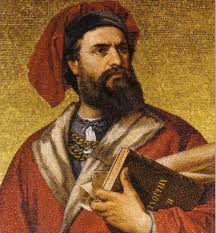
Marco Polo, The Travels

Like many movies, some of the greatest real life adventures weren’t entirely intended–with that I’ll introduce Messer Marco Polo.

I never attended any history class, school nor college, that did Marco Polo’s The Travels any true justice. The book isn’t fiction but it’s a more comparable to a Lord of the Rings novel than a standard history book:

“Along way beyond this kingdom, still farther to the north, is a province which is called the Land of Darkness, because perpetual darkness reigns there, ulit by sun or moon or star–The people here have no ruler; but they live like brute beasts in subjection to none.”1

“And I assure you that these dwellers in the Darkness are tall and well-formed in all their limbs, but very pale and colourless.”2

Above, Messer Marco spoke of some peoples he encountered in Russia, but his epic style transmission produced something close to encountering the lawless frost giants of the dark, glacial nether world. So non-fiction, but much more colourful.

To return to the opening, that his great adventure or travel to China wasn’t his original intent; Messer Marco and his brother set out from Venice to peddle some jewels in the east. He sailed from Constantinople to a Christian stronghold located on the shores of modern-day Ukraine.

He continued to travel east from there until they reached the court of Barka Khan (a lesser khan sujbect to the Great Khan, Kublai). Barka loved the jewels and Messer Marco stuck around for a year due to the profit, but then war broke out between Barka and another lesser khan of the Syrian Levant named Hulagu. Therefore, Messer Marco risked arrest by either warring faction if he returned by the way he came–so he traveled further east.

Messer Marco crossed the Tigris River, and a desert, until he reached a great city in Persia–in which he resided for 3 years because he couldn’t safely travel anywhere else. During that time Hulagu had defeated Barka in the afforementioned war and Hulagu sent some emissaries out from the Levant to travel to the Great Khan in China.

These emissaries encountered Messer Marco in Persia and were not only shocked to see a Latin so far east, but also told him that the Great Khan had never seen a Latin before and desired to meet one. The emissaries guaranteed him safe travel to China and a fortune as a result.

The Great Khan loved Messer Marco for a particular reason–Kublai’s empire was so huge that he probably never saw half the people & cultures that he ruled over. When Kublai would send ambassadors out for taxes or trading, the ambassadors would return with a strictly numbers report. The Great Khan would call them “dunces” due to the fact that their business reports displeased him. However, when he sent Messer Marco out as an ambassador, he would return with business numbers and a report concerning the peculiar customs & courtesies of the subjects Kublai had never seen. His cultural reports pleased the Great Khan.

As time went on the Great Khan’s and Messer Polo’s relationship was more akin to flat-out chums rather than political or business associates. Apparently Kublai Khan liked Messer Marco a little too much because the Great Khan detained him as an ambassador for 17 years (Marco & his brother had asked on several occasions to return home, but to no avail).

Finally, the lord of the Levant’s queen had died & this lord desired a new queen of the same lineage; therefore, he sent an envoy to the Great Khan for this new queen of the same lineage. When the envoy escorted the new queen back, many roads had been destroyed due to wars between lesser khan’s–so the envoy couldn’t find it’s way and had to return to the court of the Great Khan.

Due to being an ambassador, Messer Marco was familiar with India and it’s sea–so the Great Khan gave him leave (with letters to the Pope and many kings of Europe) to lead the marriage envoy back to the Levant by that route; after which–Messer Marco Polo returned home after 24 years abroad.

There are plethora of interesting stories in Marco Polo’s The Travels, an example: the Great Khan had a nemesis named King Kaidu, but the Great Khan never destroyed Kaidu because he was his nephew. King Kaidu had a daughter named Alyaruk, which meant ‘bright moon.’ Kaidu wanted his daughter to marry; however, he gave his daughter the privelege of marrying any man she chose. Alyraruk was a great warrior and knew what she wanted out of a husband.

The situation was simple, Alyraryk would only take a husband that could physically best her or pin her to the ground in a wrestling match. These wrestling matches became spectacles in the king’s court; a suitor would come in, wrestle Alyraryk to win her hand, and lose. When the suiter lost he had to give Alyraryk 100 horses. The end of the matter was that the king’s undefeated daughter owned over 10,000 horses.

Another short example from Messer Marco–it concerns a custom of the Tartars (Mongols):

“…when there are two men of whom one has had a male child who has died at the age of four, or what you will, and the other has had a female child who has also died, they arrange a marriage between them. They give the dead girl to the dead boy as a wife and draw up a deed of matrimony. Then they burn this deed, and declare that the smoke that rises into the air goes to their children in the other world…”3

They also held a wedding feast amongst other things for the newlywed-but- deceased children.

Messer Macro said no European Christian King nor Muslim Middle Eastern ruler came close to the power & dominion of the Great Khan–that fact is probably why little to even no information is routinely taught concerning The Travels in our Western history classes. Aside from a few Italian trading cities (where Messer Marco came from), Europe wasn’t doing good at all, so–let’s mostly skip that time period in our history classes and get to the Renaissance & the discovery of the New World.

I could quickly pop off many more examples from the book, but I will conclude: if one relies only on what history books or wikipedia or such have to say about Marco Polo’s The Travels–then such a one is truly missing out. I consider The Travels an essential source-material read for anyone who loves history.

(All citations are from Marco Polo’s The Travel’s, Penguin Classics)

  1. Page 331, Para 3 ↩︎
  2. Page 331, Para 4 ↩︎
  3. Page 102, Para 2 ↩︎

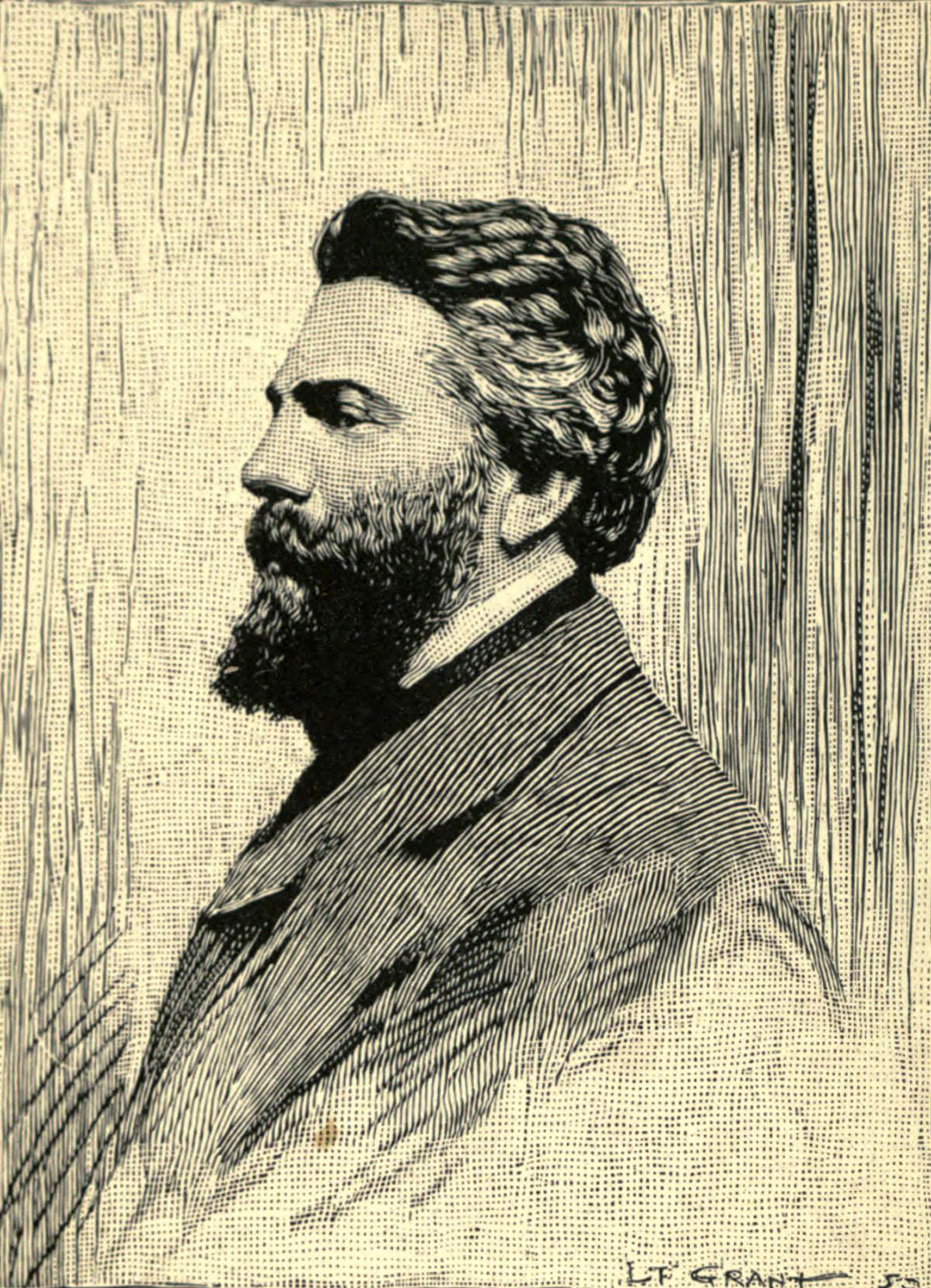
The Paradise of Bachelors and the Tartarus of Maids by Herman Mellville

Herman Mellville’s The Paradise of Bachelors and the Tatarus of Maids (PBTM) is not technically a short story; more properly a comparative essay written in poetic prose. However, without Mellville’s nearly unrivaled style of poetic prose the essay would read like a sociology report from the 1850’s. As with most classic literature since the 14th Century, Herman tips his hat to Dante Alighieri–after all the work is Bachelors Paradise & Womens Cocytus:

“‘Why is it, Sir, that in most factories, female operatives, of whatever age, are indiscriminately called girls, never women?”

The unnamed main character (we’ll assume it’s Herman) asked his guide that question near the end of his tour of a paper mill. Before the question & answer is discussed later in this article, I will note the quasi-essay involves more than the living & working conditions of men vs women in the 19th Century–industrialization figures into the mix. The theme of the work might be the question of whether women on average were lead into a better or worse life because industrialization?

PBTM is divided into two parts as the title suggests. First Herman gives an account of visiting the Templars in London. He notes how the lives of Templar Knights have changed in the industrial age–for instance they exchanged, “the big two-handed sword” for a “one-handed quill.” Also, “The helmet is now a wig.” Essentially the modern knights are lawyers, scholars–the high society types. Mellville goes long with the comparison between the poor knights of yesteryear who defended the pilgrimage routes to Jerusalem versus the self-indulgent modern knights. Aside from the namesake, the only thing the new knights had in common with the old is that they were bachelors.

Herman visits the bachelors at a paradise-like abode near the Temple Bar. He ascends a building into a high meeting place; there was a feast, snuff, stories of travels, scholarly tales & Mellville noted that his time amongst the bachelors wasn’t measured by a “water-clock,” rather a “wine chronometer.” The only missing indulgence during the encounter was women.

We encounter women in part 2 of the essay. Herman needs an abundance of envelopes for his company & decides to purchase direct. His route to the paper mill includes passing through a, “Dantean gate”–a shortened version of, “All hope abandon, ye who enter in!” (Inferno 3.9, which what I quoted is also shortened version of what’s written above hell’s gate). Herman travels down “Mad Maid Bellows’ Pipe” until he reaches the mill; which is situated at the base of snow covered mountains.

Like the River Styx falling as a tributary for Cocytus; the mill is powered by the falling waters of “Blood River.” Intrigued by the glimpses of pale, blue faced women upon his arrival, after Herman completes his deal for the paper products with the owner he asks for a tour of the factory. Instead of Mellville being guided by Virgil, a knowledgeable factory hand called “Cupid” is his guide. The mill is a microcosm of all the circles in Dante’s Inferno. Women with expressions just as blank as the tables they sat at folded envelopes. Others served, “iron animals.” Some areas of the factory are intensely hot; others bitterly cold.

Melville calls the central machine in the factory an “iron behemoth”–it replaces Satan in his tale. In Inferno, Satan vigorously flaps his gigantic wings in an eternal attempt to escape the frozen lake & although Cocytus may develope cracks & bend, it never breaks. Melville provides a witty allusion to that scene in his story. During the tour of the factory, Mellville watches the paper pulp slowly travel the grooves & rollers of the iron behemoth, but he is perplexed that the imperfect paper which looks like cobwebs at one point doesn’t break. He asks Cupid if it ever breaks; Cupid informs him that it never tears or breaks.

The actual labour in the factory is performed by the women & the only males noted are Cupid (Mellville notes Cupid seemingly doesn’t do any job) & the owner. The women served the machinery, “mutely and cringingly as the slave serves the Sultan.” While Mellville gives descriptions of the machine/human relationship similar to Karl Marx–Herman’s PBTM is a counterpoint to The Communist Manifesto (which is probably why Mellville’s short story/essay is AWOL in modern education).

Returning to the first quote, a question from the story, why were all the women in the factory, no matter what age, called “girls?”

The answer is that the women in the factory were generally unmarried; more precisely, women with husbands & children aren’t steady workers–they miss time. That’s not good for production & Karl Marx helped cook up a theory that accelerating the destruction of the family, women’s lib as they call it, somehow would help humanity free itself from servitude to machines (and their owners) in the future. Marx was a pied piper in service of the wealthy he allegedly opposed. In fact, the part of Marx in Mellvile’s PBTM was played by the bachelors.

Mellville’s poetic essay The Paradise of the Bachelors and the Tartarus of Maids provided an argument against The Communist Manifesto via that without the family remaining as the primary structure for a civilization, the boys would never become men (modern knights were now boys just having fun–nothing worth defending anymore) & the girls would never become women (they left the service of the family for an unhappy, unfulfilling life serving machines/corporations).