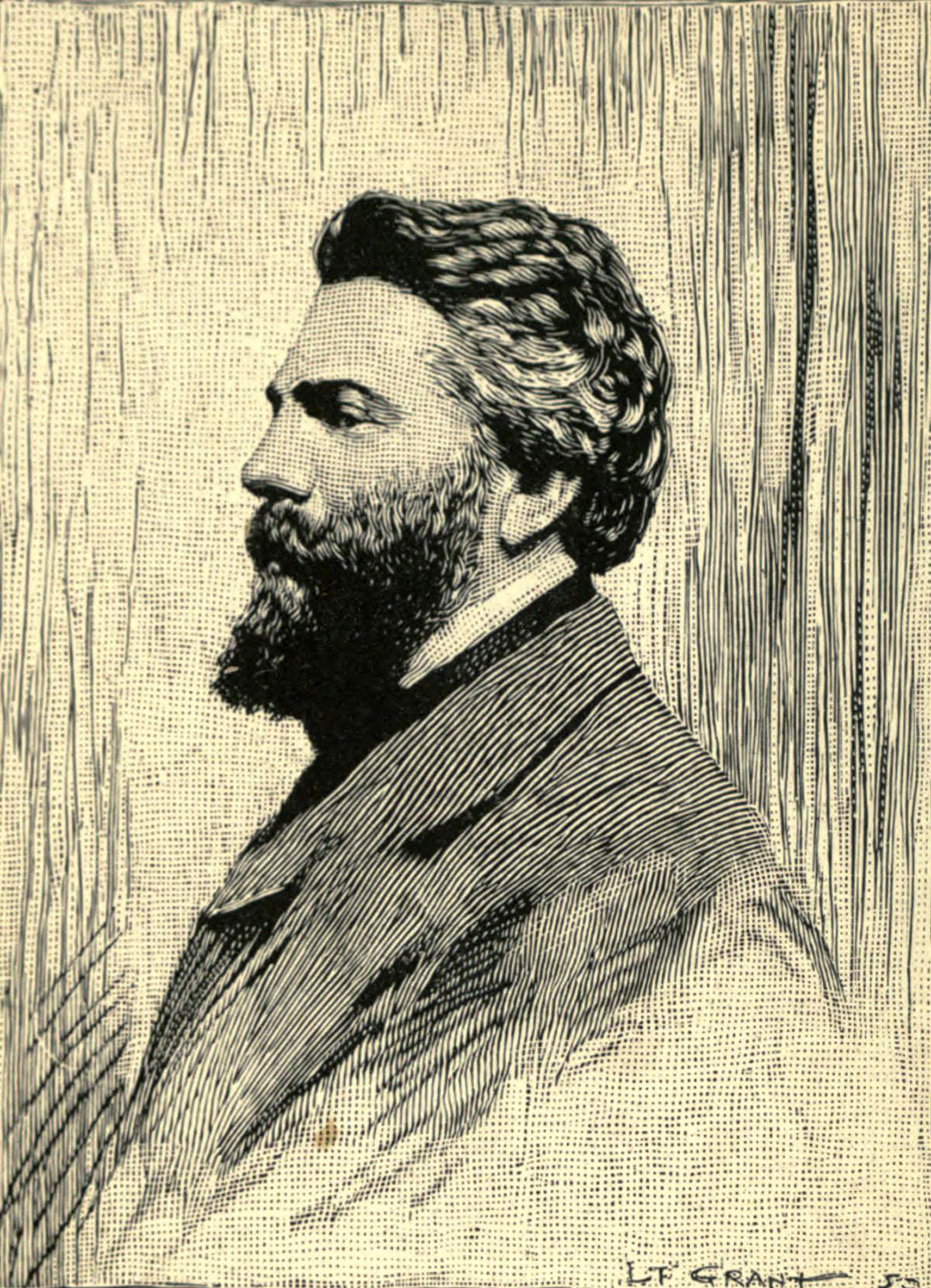
The Paradise of Bachelors and the Tartarus of Maids by Herman Mellville

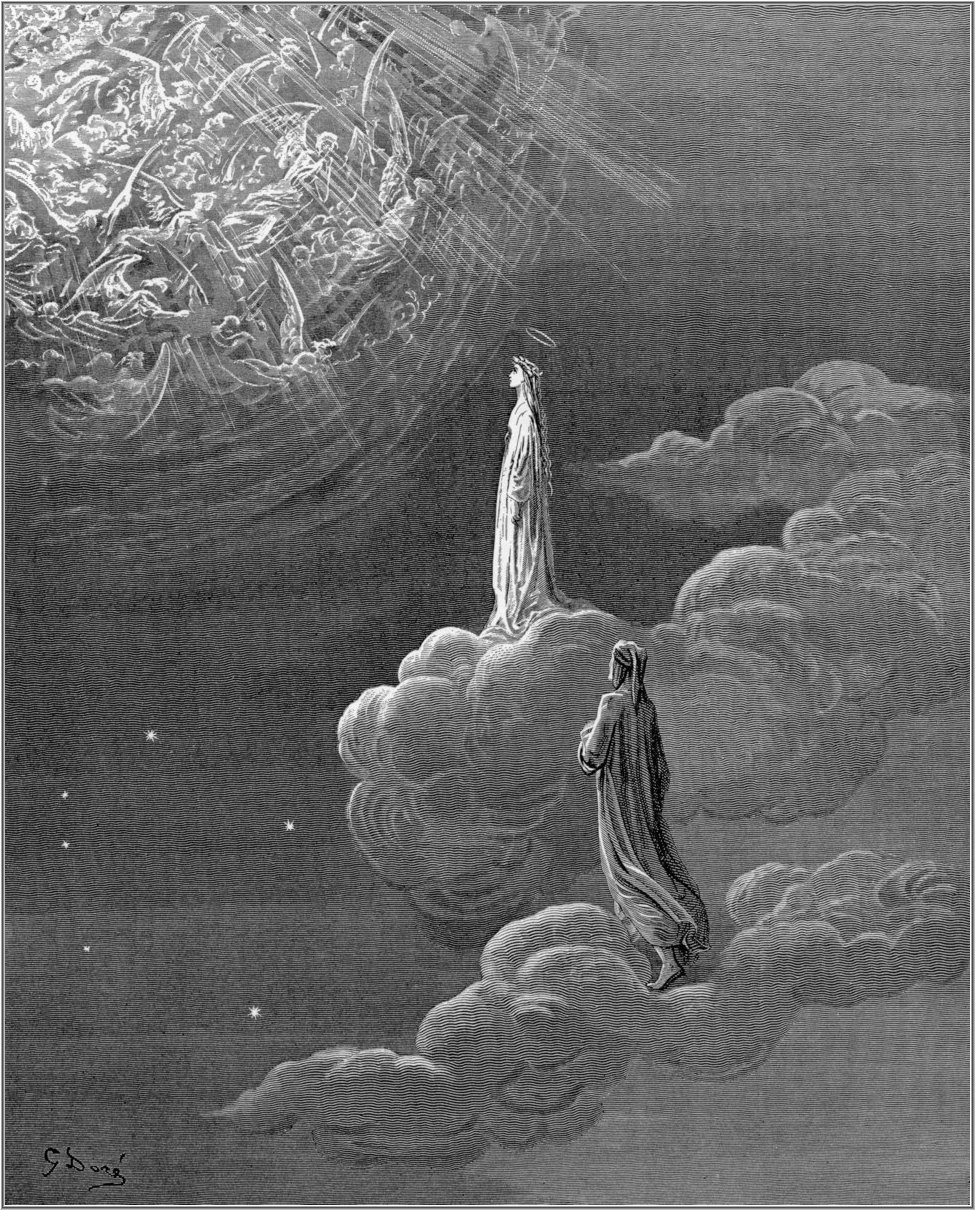
Herman Mellville’s The Paradise of Bachelors and the Tatarus of Maids (PBTM) is not technically a short story; more properly a comparative essay written in poetic prose. However, without Mellville’s nearly unrivaled style of poetic prose the essay would read like a sociology report from the 1850’s. As with most classic literature since the 14th Century, Herman tips his hat to Dante Alighieri–after all the work is Bachelors Paradise & Womens Cocytus:

“‘Why is it, Sir, that in most factories, female operatives, of whatever age, are indiscriminately called girls, never women?”

The unnamed main character (we’ll assume it’s Herman) asked his guide that question near the end of his tour of a paper mill. Before the question & answer is discussed later in this article, I will note the quasi-essay involves more than the living & working conditions of men vs women in the 19th Century–industrialization figures into the mix. The theme of the work might be the question of whether women on average were lead into a better or worse life because industrialization?

PBTM is divided into two parts as the title suggests. First Herman gives an account of visiting the Templars in London. He notes how the lives of Templar Knights have changed in the industrial age–for instance they exchanged, “the big two-handed sword” for a “one-handed quill.” Also, “The helmet is now a wig.” Essentially the modern knights are lawyers, scholars–the high society types. Mellville goes long with the comparison between the poor knights of yesteryear who defended the pilgrimage routes to Jerusalem versus the self-indulgent modern knights. Aside from the namesake, the only thing the new knights had in common with the old is that they were bachelors.

Herman visits the bachelors at a paradise-like abode near the Temple Bar. He ascends a building into a high meeting place; there was a feast, snuff, stories of travels, scholarly tales & Mellville noted that his time amongst the bachelors wasn’t measured by a “water-clock,” rather a “wine chronometer.” The only missing indulgence during the encounter was women.

We encounter women in part 2 of the essay. Herman needs an abundance of envelopes for his company & decides to purchase direct. His route to the paper mill includes passing through a, “Dantean gate”–a shortened version of, “All hope abandon, ye who enter in!” (Inferno 3.9, which what I quoted is also shortened version of what’s written above hell’s gate). Herman travels down “Mad Maid Bellows’ Pipe” until he reaches the mill; which is situated at the base of snow covered mountains.

Like the River Styx falling as a tributary for Cocytus; the mill is powered by the falling waters of “Blood River.” Intrigued by the glimpses of pale, blue faced women upon his arrival, after Herman completes his deal for the paper products with the owner he asks for a tour of the factory. Instead of Mellville being guided by Virgil, a knowledgeable factory hand called “Cupid” is his guide. The mill is a microcosm of all the circles in Dante’s Inferno. Women with expressions just as blank as the tables they sat at folded envelopes. Others served, “iron animals.” Some areas of the factory are intensely hot; others bitterly cold.

Melville calls the central machine in the factory an “iron behemoth”–it replaces Satan in his tale. In Inferno, Satan vigorously flaps his gigantic wings in an eternal attempt to escape the frozen lake & although Cocytus may develope cracks & bend, it never breaks. Melville provides a witty allusion to that scene in his story. During the tour of the factory, Mellville watches the paper pulp slowly travel the grooves & rollers of the iron behemoth, but he is perplexed that the imperfect paper which looks like cobwebs at one point doesn’t break. He asks Cupid if it ever breaks; Cupid informs him that it never tears or breaks.

The actual labour in the factory is performed by the women & the only males noted are Cupid (Mellville notes Cupid seemingly doesn’t do any job) & the owner. The women served the machinery, “mutely and cringingly as the slave serves the Sultan.” While Mellville gives descriptions of the machine/human relationship similar to Karl Marx–Herman’s PBTM is a counterpoint to The Communist Manifesto (which is probably why Mellville’s short story/essay is AWOL in modern education).

Returning to the first quote, a question from the story, why were all the women in the factory, no matter what age, called “girls?”

The answer is that the women in the factory were generally unmarried; more precisely, women with husbands & children aren’t steady workers–they miss time. That’s not good for production & Karl Marx helped cook up a theory that accelerating the destruction of the family, women’s lib as they call it, somehow would help humanity free itself from servitude to machines (and their owners) in the future. Marx was a pied piper in service of the wealthy he allegedly opposed. In fact, the part of Marx in Mellvile’s PBTM was played by the bachelors.

Mellville’s poetic essay The Paradise of the Bachelors and the Tartarus of Maids provided an argument against The Communist Manifesto via that without the family remaining as the primary structure for a civilization, the boys would never become men (modern knights were now boys just having fun–nothing worth defending anymore) & the girls would never become women (they left the service of the family for an unhappy, unfulfilling life serving machines/corporations).
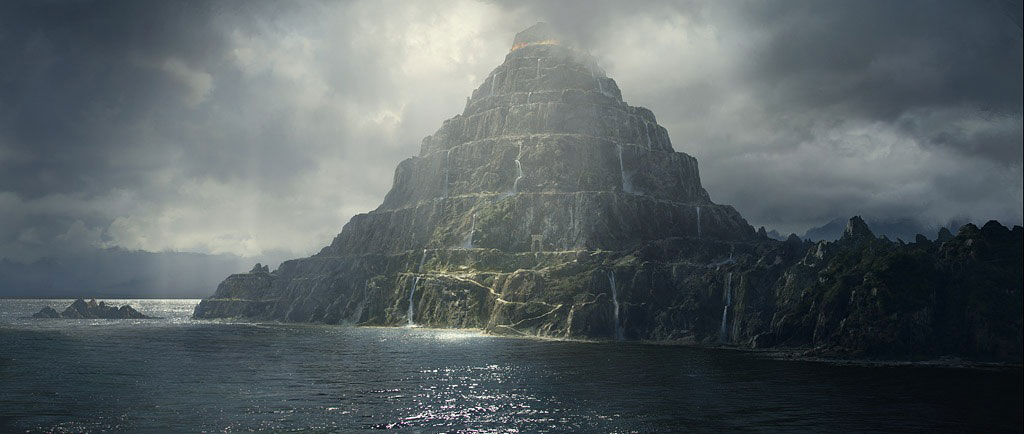
Matilda–Purgatorio

Matilda has long been considered one the greatest mysteries in Dante’s Comedy. As a result of my full spectrum Dante Alighieri studies; only Matilda’s historical namesake is a mystery to me.

Alas, Matilda is Joan, who is also nicknamed Primavera (name means “Spring”), from La Vita Nuova XXIV.

Matilda directly preceded Beatrice’s arrival atop Mount Purgatorio in The Comedy. Flowers, like the flowers of spring are strewn about the verses regarding Matilda. Let’s also not ignore the fact that Matilda baptizes Dante in preparation for his reunion with Beatrice. So she plays the role of a John the Bapist-like figure in Purgatorio.

In Dante’s real life, Joan AKA Primavera preceded her friend Beatrice as the two walked down the street one day. Of course Dante likened the scene to John the Baptist preceding the True Light. Also he noted the fact that the name Joan is a derivative of the name John.  Dante was ridiculous during his obsession with Beatrice, but an enjoyable kind of ridiculous.


Purgatorio–Turning Point (Virgil’s Discourse on Love)

Dante Alighieri’s Inferno is a fine standalone. Hell is thick, dark, exhausting & simply escaping it offers satisfaction enough for the majority of readers. There are more reasons people often vacate The Comedy at Purgatorio. If one continues to climb Mount Purgatorio it is at Canto 51 & 52 (of 100) that we reach the turning point or prime catharsis for Dante’s real life. Catharsis (Greek) & Purgatorio (Latin) are close to the same words.

The dilemma of the entire poem is love.  Dante had a secret, burning, never realized, thus unrequited love for Beatrice. Also take into account his later exile from the city of Florence. On top of that, consider that Dante poetically tells us in the first three lines of the book that he was in the midst of most likely a PTSD episode or emotional time travel event (love madness or obsessive love can manifest due to PTSD). All the former emotions from Dante’s Vita Nuova time period may have flooded back in coupled with the emotions from his recent exile.

I must point out that Dante’s Limbo is the first circle of the Inferno because that is the initiation for a similar experience to Dante’s. The modern usuage of “Limbo” is not knowing something or waiting for an answer–incorrect according to Dante’s usage. His Limbo is a constant desire coupled with the tormenting knowledge that there is no hope of fulfillment:

“For such defects, and not for other guilt,
Lost are we and are only so far punished,
That without hope we live on in desire.”

Inferno 4.40-42

Dante may have been experiencing a PTSD duality when he began writing  The Divine Comedy as they call it, but the proper title per Dante “Here beginnith the comedy of Dante Alighieri, a Florentine by birth, but not in manners”:

“MIDWAY upon the journey of our life”

Inferno 1.1

It is our (plural) life (singular). It is not our lives because Dante is not including our lives in the equation, but the separate parts of his life, to wit–him from sometime from the past occupying the same space as him from the present.This time-travel duality was best reflected by Dante in Inferno 8 & 9. The cantos reflect emotional events from two distant times in Dante’s life. Both events are portrayed just outside the walls of the city of Dis.

The walls of Dis separate the Inferno’s 5th & 6th Circles. The 5th Circle is the punishment for the Irascible & the Sullen or those overcome by bitterness–wrath. Both real life events (Beatrice & Exile) threatened to leave Dante in a stasis–bitterness. In the poem both events attempt to permanently halt his journey in the circle of wrath.

Inferno 8 reflects the emotions from Dante’s exile. The city of Dis is a hellish representation of the city of Florence (IE it has mosque towers instead of Christian spires). When Dante & his guide Virgil reach the walls of the city, the denizens on top of the wall state that Virgil can come in, but Dante cannot pass. Virgil is the symbol for Dante’s poetry. Florence wanted the poetry (or an association with it), but not the poet. Dante could have been in a perpetual state of bitterness over his exile.

Inferno 9–we are still outside the walls of Dis. This canto reflects the emotions from Dante’s episode in Vita Nuova XIV. In the Inferno, three Furies land on the mosque towers & call for Medusa to turn Dante into stone–a transfiguration. In Vita Nuova XIV, Dante was neck deep in his love madness for Beatrice. His friend invited him to what was allegedly a simple gathering of lovely women–he did not even know Beatrice would be there.

The entry & sonnet are slightly ambiguous, but the historian Boccaccio believes it was a small wedding reception dinner. The new bride–Beatrice. At the sight of Beatrice & her love interest, as Dante puts it, he suffered a transfiguration. He became pale & sickly. A few of the women at the gathering (The Furies) & Beatrice (Medusa) began to giggle & mock Dante for his sickly appearance. Dante was mocked by the woman he loved during a great moment of suffering. Again, Dante could have been perpetually bitter over the matter.

“You join with other ladies to deride me
and do not think, my lady, for what cause
I cut so awkward and grotesque a figure…”

Vita Nuova XIV, 1-3

Dante & Beatrice’s reciprocal relationship prior to his transfiguration, according to Dante, was nothing more than Beatrice giving Dante one friendly greeting on the street (love madness). It was a long, secret, building, burning love I had for a woman that initiated my event. Like Dante with Beatrice, I fell in love with her at first sight, but it was a long time before any association. At best, it’s climax, the relationship was only an association between us in the setting of a formal environment.

It was so much more to me because the long building secret desire (Proverbs 27:5). Once the association went south, even though it never actually went north, I had heard 2nd hand that she claimed, “We were never even friends.” You can be frozen in a state bitterness over such a thing.

Once you are able to resume a fully functional state after a bout with love madness or unrequited love, you desire answers. It is apparent Dante long sought answers to the same questions I had.

When we feel the true emotion of love, we believe it is automatically good. But if it is good, how could it lead us into disaster? How can the recipient hate it so much? Was a person’s love madness a simple pride problem instead? Most importantly–was it actually love?

In Inferno, sin is punished. In Purgatorio, vice is purged. Both realms have circles of wrath. Dante spends much time & was halted before leaving the circles of wrath in Inferno & Purgatorio. It is Purgatorio’s circle of wrath where Virgil provides the discourse on love. This discourse provides Dante with some answers to questions I posted in the paragraph above:

“Hence thou mayst comprehend that love must be
The seed within yourselves of every virtue,
And every act that merits punishment.”

Purgatorio 17.103-105

“The natural was ever without error;
But err the other may by evil object,
Or by too much, or by too little vigour.”

Purgatorio 17.94-96

“Now may apparent be to thee how hidden
The truth is from those people, who aver
All love is in itself a laudable thing,

Because its matter may perchance appear
Aye to be good; but yet not each impression
Is good, albeit good may be the wax.”

Purgatorio 18.34-39

I love the allegory of the wax. The wax is love & good nonetheless–regardless of the impression (seal) in it.

Love in itself, is intrinsically good. Enter the object/subject of that love (John 3:19) or the degree in respects to a certain object/subject. During my event, which included the unrequited love, those I told said it was obsession. I was offended by the claim & countered that it was love. We were both right according to Dante. Love madness is love…but it’s not destiny. There is the rub–the thought that it must destiny due to the personal strength of the emotion.

In conclusion, if you suffer through obssession or love madness (I consider the latter a more accurate label), even if it is or isn’t a byproduct of something else–you want some answers. Is loving someone who doesn’t love you (or doesn’t return it to nearly the same degree) some sort of crime? No, because who can understand the subject of unrequitted love better than God?

John 1:11 “He came unto his own, and his own received him not.”

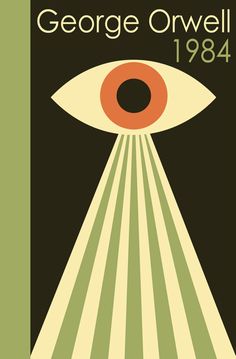
Orwell’s “1984”–The Divine Tragedy

Dante Alighieri’s Comedy and George Orwell’s 1984. The Comedy on it’s veneer is the tale of a backslider’s return to God and 1984 is the tale of backslider’s return to the State (the Party).

In 1984, Virgin Films & Umbrella-Rosenblum Films produced a movie version of Nineteen Eighty-Four. It was close enough to the book to appreciate; save for the omission of my favourite line from the book:

“We control matter, because we control the mind” (1984, book 3, chapter 3).

Aside from that, the short clip below from the movie will suffice to demonstrate my main point. The clip begins after the protagonist Winston has been successfully rehabilitated via torture:

(I edited the clip to begin at 5:25. End the video when the credits roll)

https://youtu.be/BjDg3lQGmRs?t=5m25s


Save for one detail, the clip from the movie mirrors the end of the book. The end of 1984 is a twisted version of the end of Dante’s Paradiso. I could give a line-by-line comparison of the end of both books, but it is much easier to paraphrase:

Dante stares at the three-fold circles of the Trinity.                                                          Winston stares at the news on television screen.

Dante sees an effigy of a man (Jesus Christ) appear in the 2nd circle of the Trinity.      Winston sees a man (Big Brother or BB) appear on the television screen.

Dante is given understanding to answer the mystery of how man fits in with God. Winston finally understands the mystery of the smile under BB’s mustache (book only).

Dante is filled with love for God.                                                                                                        Winston is filled with love for Big Brother.

I used Paradiso as the first example, but 1984 is an inversion of the entire Comedy.

Winston’s inferno begins with Julia (Beatrice)–he has a “fire in his belly.” Shortly thereafter, that’s when the antagonist O’brien introduces himself. BTW–O’brien is the bizarro-world Virgil.

Virgil accompanies Dante from the beginning of Inferno to the top of Mount Purgatorio. The top of Mount Purgatorio is the terrestrial paradise–that would be called “Room 101” in 1984. O’brien guides Winston through his inferno to Room 101. Notice how Winston envisions beautiful rolling hills in association with Room 101? In the Comedy, Virgil stops and delivers many discourses; so to with O’brien and his discourses in the 1984.

Virgil’s greatest discourse comes in Canto XVII of Purgatorio–his discourse on love. Here is a famous portion of the discourse from the Longellow translation of the Comedy:

“Hence thou mayst comprehend that love must be
The seed within yourselves of every virtue,
And every act that merits punishment” (Purgatorio, 17.102-105)

O’brien delivers a parody of Virgil’s discourse on love:

“We shall abolish the orgasm. Our neurologists are at work upon it now. There will be no loyalty, except loyalty towards the Party. There will be no love, except the love of Big Brother” (1984, Book 3, Chapter 3).

O’brien’s discourses come while he is torturing Winston. He parody’s discourses on love, freewill & the soul found in the Comedy.

In the Comedy, the Roman poet Statius joins Dante & Virgil in the 5th Circle of Purgatorio and accompanies them to the top of the mountain. Orwell is a great writer and didn’t leave out Statius; he named him Parsons. Lo and behold, we meet Parsons early in the book, he also ends up in the holding cell with Winston and he completes the journey to the terrestrial paradise or Room 101.

In Purgatory  the shades are purged of their vice; they must perform the opposite–if gluttony, then fasting. At the Ministry of Love thought criminals are purged of their thought crimes; they must confess the opposite.

In 1984, Goldstein is Satan or Dis. Although Winston ends up illegally making love to Julia several times, he hasn’t reached the lowest circle of Inferno yet–treachery. That happens when he reads Goldstein’s book; that’s treachery against the Party.

There are many, many more details, but the blog has shown you enough. You can have fun finding more parallels on your own. In conclusion, Orwell’s 1984 is a genius work of parody, which is why I call it The Divine Tragedy.


Dante Alighieri


I wrote my college thesis on the works of Dante Alighieri (c. 1265-1321). If I were to create renaissance currency, I would place Dante on the $100 bill. Proto and later Renaissance figures looked up to him. Even Rodan’s sculpture, The Thinker was originally The Poet in the Gates of Hell.

Not only should Dante be considered the leading proto-Renaissance figure, but also a proto-Reformer. Thus, don’t be scared off by Dante if you are a Protestant like me. Dante may not generally be placed at the forefront of both the Renaissance & The Reformation because the Black Plague struck Italy a few decades after he died. This left a gulf between Dante and later well-known figures.

Here are some interesting things that are not well known about his works:

Dante did not label his Comedy, divine (the label was applied nearly two centuries after his death). Dante resided in the court of a noble named Cangrande when he wrote Inferno & Purgatorio. He resided in the court of Guido Novella when he wrote Paradiso. However, Dante sent Cangrande a copy of Paradiso and a letter, which provided his own title for the complete work:

“The title of the book is ‘Here beginneth the Comedy of Dante Alighieri, a Florentine by Birth, but not in character’” (1).

Dante certainly wasn’t ignorant of the Bible. In his works he quoted the Bible far more than any other source. One must understand his work is not doctrine, it is a poem. Dante mentions the “third heaven” from 2 Corinthians 12:2 in Chapter XIV of The Convivo. His heavens were set in three major divisions, the stars (planets), the Milky Way and God.

Also, understand Dante’s use of poetic allegory. Dante said in Chapter XIV of The Convivo: “I say that by heaven I mean science, and by the heavens the sciences…” From there he compared each of his poetic heavens later used in Comedy to the classical liberal arts:

Circle of Paradiso Convivo
The Moon Grammar
Mercury Dialectic
Venus Rhetoric
The Sun Arithmetic
Mars Music
Jupiter Geometry
Saturn Astronomy
The Fixed Stars Physics/Metaphysics
Primum Mobile Moral Science
Empyrean Divine Science

What follows were some of the conclusions from my thesis:

Dante’s Comedy is his poetic autobiography. I performed a comparative analysis of his much earlier autobiographical work Vita Nuova to his Comedy. I concluded that Vita Nuova was an embryonic version of Inferno & Purgatorio.

Dante’s heavens or the classical liberal arts (the Trivium, Quadrivium & Theology) were the subjects that brought him happiness after his exile. In Paradiso, Dante is guided by Beatrice. Her appearance becomes more brilliant & glorious with each new circle of Paradise. That represents the light & joy Dante received from studying each subject–the greatest resulting from Divine Science or Theology. His Comedy ends with his future death or ultimate return to God.

Thus, the stages and characters of the Comedy are just as much based off the crime, punishment & reward of some as it is encounters & circumstances from Dante’s real life timeline. There is a mix of characters for those two reasons. Beatrice was Dante’s  Inferno. The walls of the city of Dis separated his condition before & immediately after Beatrice’s death. You could say it separated his obsession & depression. For instance, Dante contemplated suicide after her death (the 7th Circle–violence).

 I learned in Vita Nuova that Dante was intrigued with the number 9. He associated that number with Beatrice in several entries. Guess what–the inferno has 9 circles. So now you know why Dante (I say again–who knew the Bible well) placed 10 heavens & 9 hells in his poem.

Before I conclude, here is some bonus material from my comparative analysis of Vita Nuova & the Comedy: Dante’s poetic treachery. I believe Virgil represents Dante’s poetry in the Comedy. Who sent Virgil to guide Dante–Beatrice. Who inspired Dante’s first poetry–Beatrice. In Vita Nuova all Dante’s poetry was inspired by Beatrice (muse) until…

Something before I continue that is related; in Inferno all the rivers mentioned fall & converge in its lowest circle Cocytus (treachery). The bodies of water become frozen. This represents Dante’s frozen tears over Beatrice.

I believe Cocytus is reflected late in Vita Nuova when Dante returns to a familiar spot in Florence to sulk over Beatrice’s passing. He notices a fair, young woman staring at him from behind a window. Because of the pity in her eyes she temporarily becomes Dante’s new muse. Treachery! There can be only one muse! Vita Nouva concludes with Dante’s vision of the heavenly Beatrice. Dante rejects the anti-muse & finally escapes his real life hell.

Beatrice represented the things that brought Dante joy. At first it was Beatrice in the flesh; later it was Beatrice or Lady Philosophy. He called his anti-muse pity. It was joy vs pity and like Cocytus, Dante could have been frozen in a state of desiring pity forever.

A clue to Dante’s treachery is found in the Comedy when he finally reunites with Beatrice atop Mount Purgatorio. Beatrice chastises him–to include:

“As soon as ever of my second age [her death]
I was upon the threshold and changed life,
Himself from me he took and gave to others.” (Purgatorio 30.124-126)

I have much more to say about Dante & his works, but I hope you enjoyed this small offering.


(1) Pg 196, Toynbee, Paget , Dante Alighieri: His Life and Works, Dover Publications Inc.